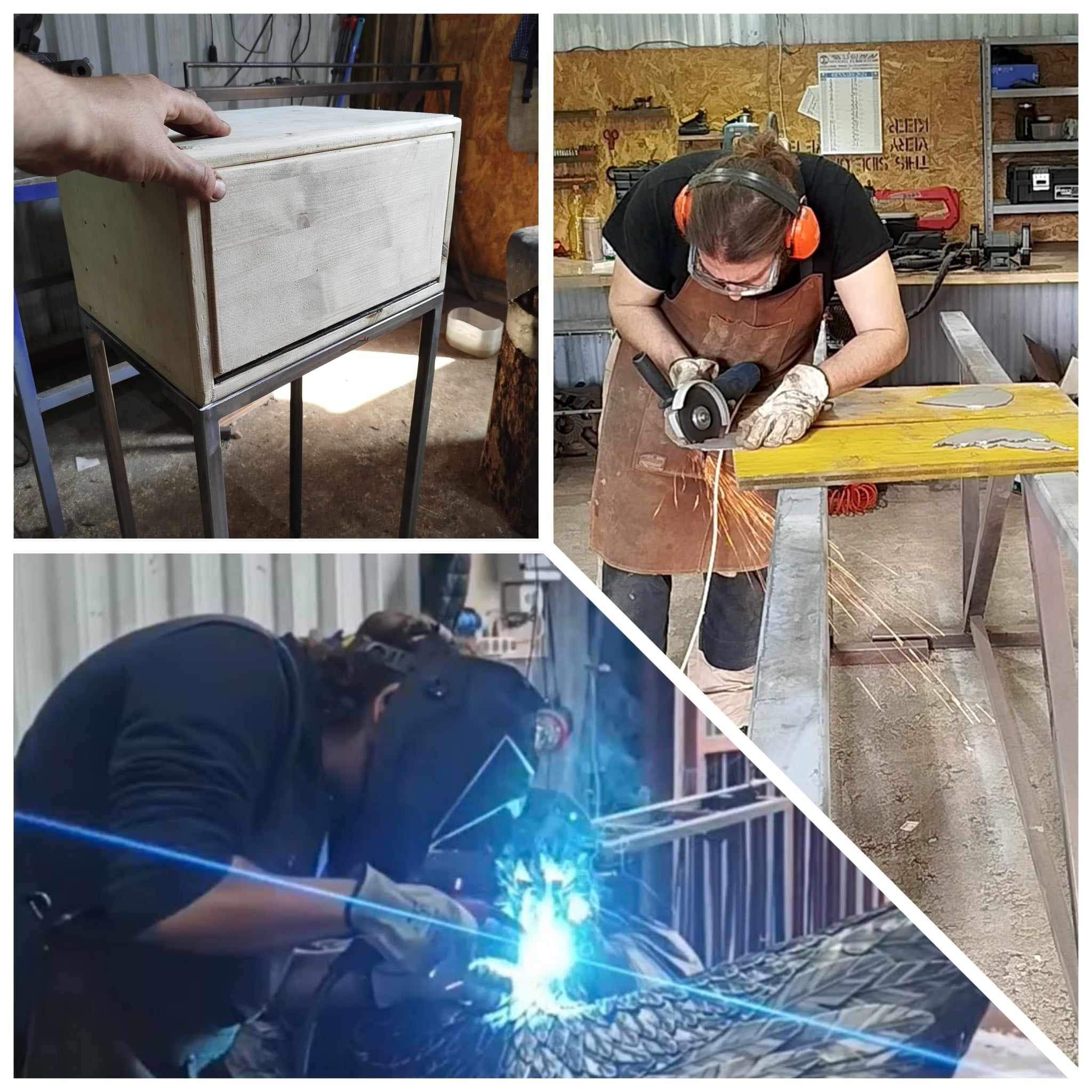
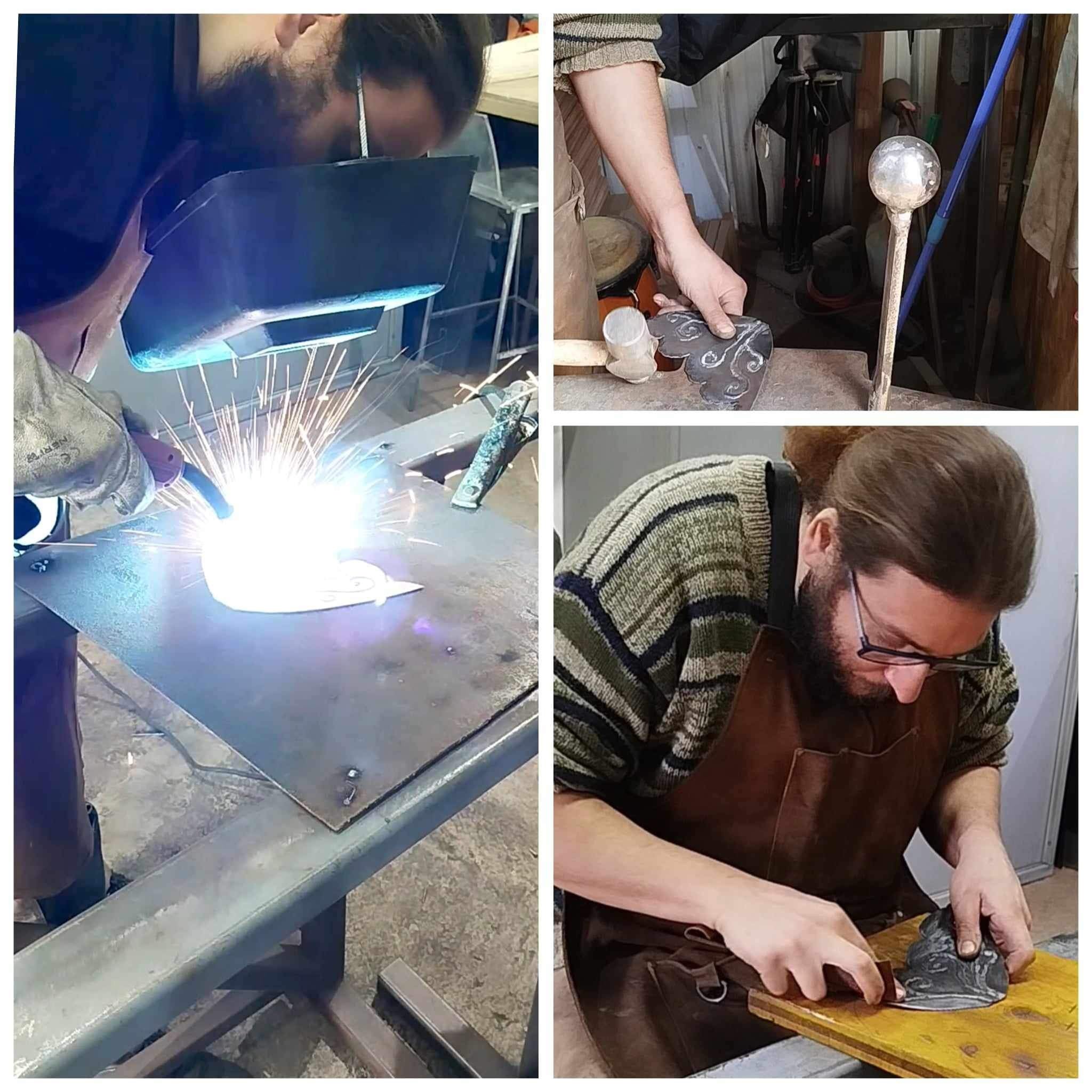
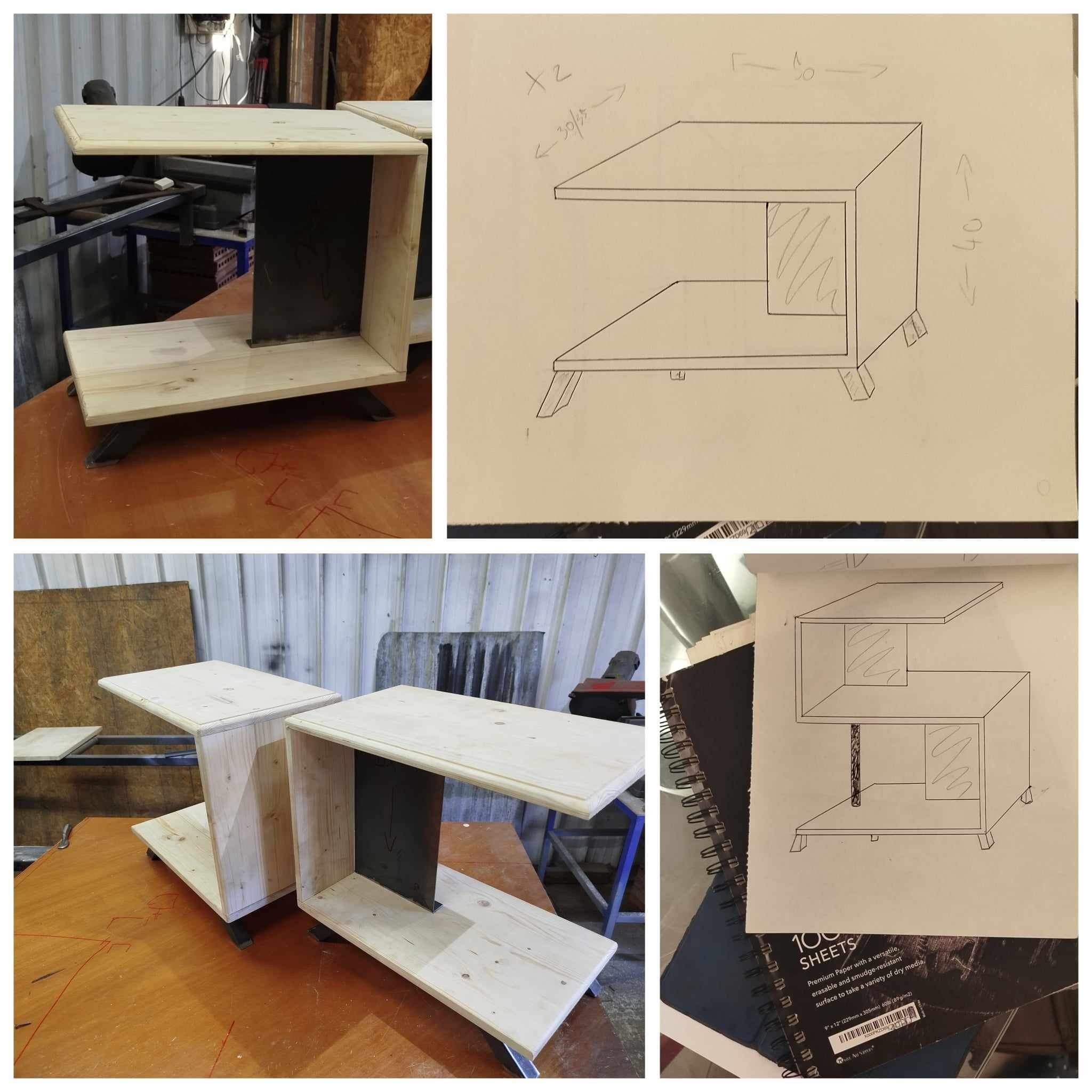
An element designed for that space

A project does not always require an existing object.

Sometimes what is missing is precisely an element capable of completing a space, defining it, or introducing a particular presence: you may have a clear idea of the effect you want to achieve, an atmosphere, a suggestion, without yet knowing what form it will have to take.

It is above all in this space that I can make my work available.

Starting from the context, the designer's instructions, and the identity of the environment, I can develop a new element, designed specifically for that place, combining function, material, and a personal artistic vision.

Not simply adapting an existing product, therefore, but imagining, through various levels of collaboration, what does not yet exist and giving it a concrete form.

The collectionsThe collections on this site feature furniture and accessories designed and crafted in my workshop, allowing you to explore the different areas and languages of my work. They do not constitute a closed catalog of models, but rather a selection of completed projects: examples of techniques, materials, formal solutions, and different ways of approaching an object. A new work can start from one of these elements, reinterpret it, or be created entirely from scratch in relation to a space, a function, or an idea.

EXPLORE

Different levels of collaboration

Every project may require a different approach.

The starting point can be a fully defined drawing, a sketch, a function, a material, an aesthetic reference, or simply a feeling you want to introduce into a space.

I can therefore intervene with varying degrees of autonomy: from the faithful realization of an already designed element, to the shared development of a solution, up to a freer interpretation in which the designer defines the context, the requirements, and the general direction, leaving me more room in the search for form.

The overall project always remains the point of reference. My contribution consists of making technical skills, craftsmanship experience, and a personal language available to develop, within that project, the element that requires something beyond the standard.

Craftsmanship and artistic research

My work in furniture remains distinct from my artistic research, yet both experiences share the same relationship with material, form, proportion, and space.

The artistic practice I have developed over the years allows me to also address elements that require a more organic, naturalistic, decorative, or sculptural component, and to work not only on the function of the object but also on its presence within the environment.

This component is not imposed on the project: it is made available.

When greater interpretative freedom is allowed, it can become a tool for developing highly distinctive pieces, in which craftsmanship, design, and artistic research come to brush against one another without losing the object's function.

EXPLORE

Authenticity and uniqueness

Every creation is approached as a project in its own right.

Handcrafting allows for the free adjustment of proportions, materials, shapes, and details, adapting the object to the space for which it is conceived.

My language moves between essential geometries and organic forms, structure and decoration, materials left in their authentic state and more pronounced transformations of the medium.

Not a style to be applied indiscriminately, but a collection of experiences, techniques, and sensibilities to be used in relation to the desired result.

THE VALUE OF A CHOICE

Some processes immediately declare their artisanal nature: a beaten shape, a rose forged in iron, a sculptural element. Other objects may instead appear simpler, even familiar in their forms. But simplicity and standardization are not the same thing.

Not everything that distinguishes a handcrafted object needs to be obvious. Craftsmanship does not need to chase industry or compete on its own terms: it makes sense precisely when it retains the freedom to arrive at things in a different way.

The value of this way of working, therefore, lies not only in the uniqueness of the result, nor in the number of hours required to create it. It lies above all in keeping available the possibilities that belong to the act of making: being able to dedicate attention to a detail that does not need to be simplified for production reasons, letting a technique suggest a form, choosing a solution for what it contributes to the object rather than for how easily it can be repeated.

In this sense, craftsmanship does not simply represent an alternative to industrial production. It preserves a different way of arriving at things. A heritage of knowledge that gains meaning precisely when it is used in the present, contaminated by new requirements and led toward forms that those who developed it in the past could not have imagined.

It is also for this reason that its presence in contemporary design has a value that goes beyond the single object. Every technique that continues to be employed remains a possibility; every piece of knowledge that continues to confront new problems can still evolve. What is lost, on the contrary, is not just a craft, but a part of the vocabulary with which it is possible to think and build things.

Because craftsmanship is not preserved simply by appreciating it. It continues to exist when it continues to be chosen, used, and transformed.

On Instagram you will mainly find the artistic side of my work, but also finished pieces, works in progress and other projects. For direct contact: WhatsApp or phone

366 1241561

Contact