LEANDRO
LEANDRO stems from a personal reflection on suffering and, above all, on the possibility that it may remain invisible to others.
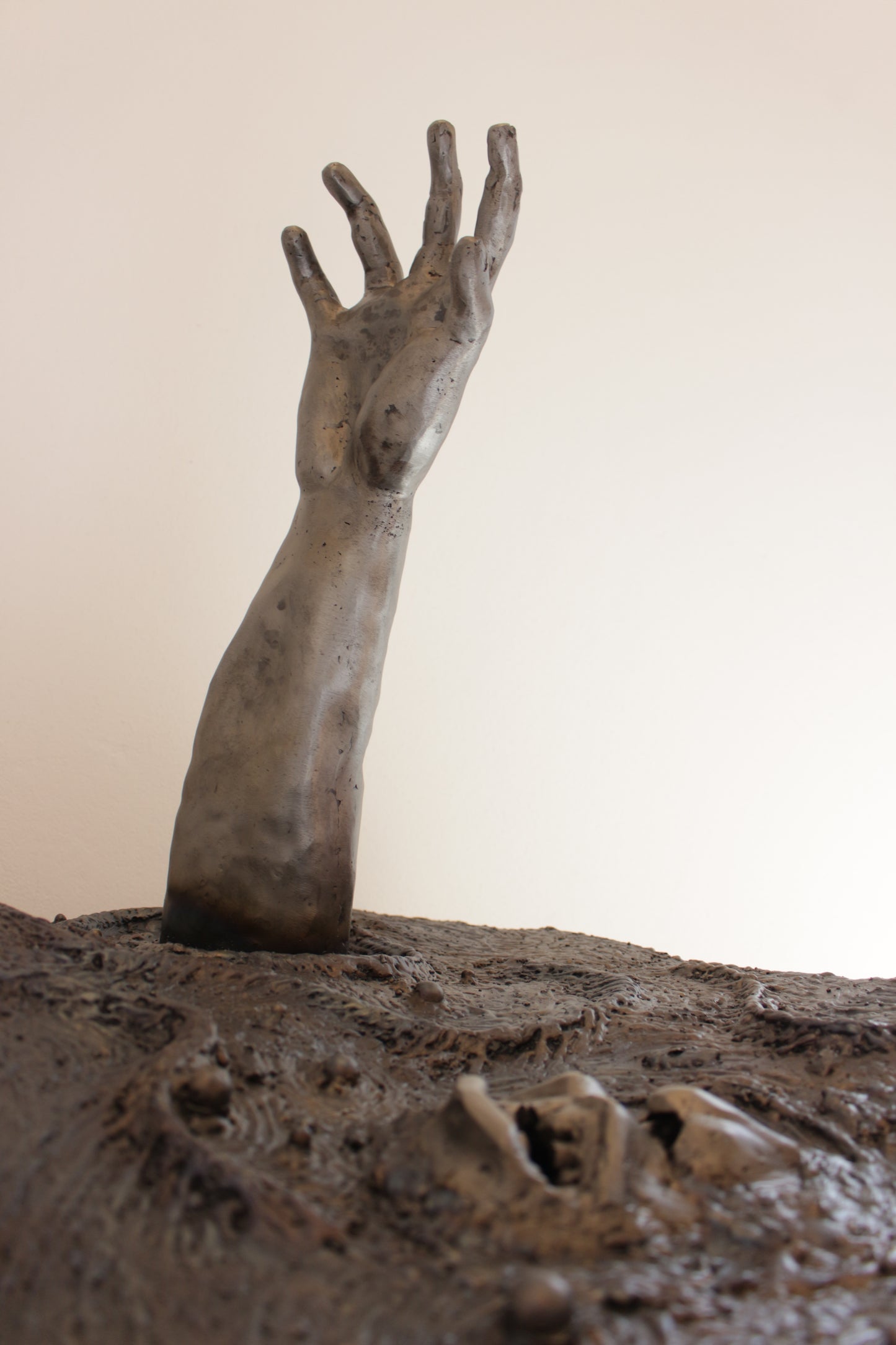
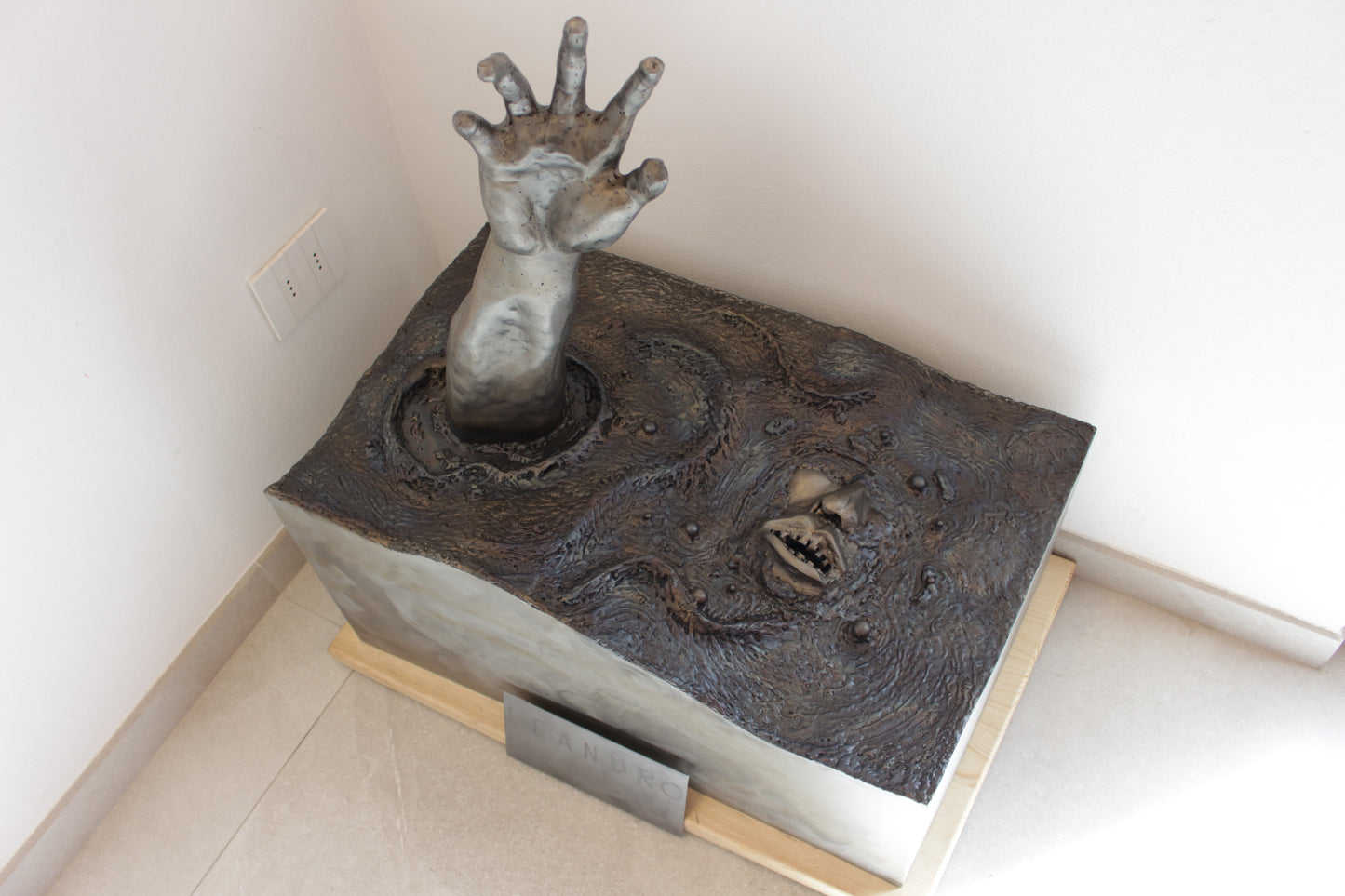
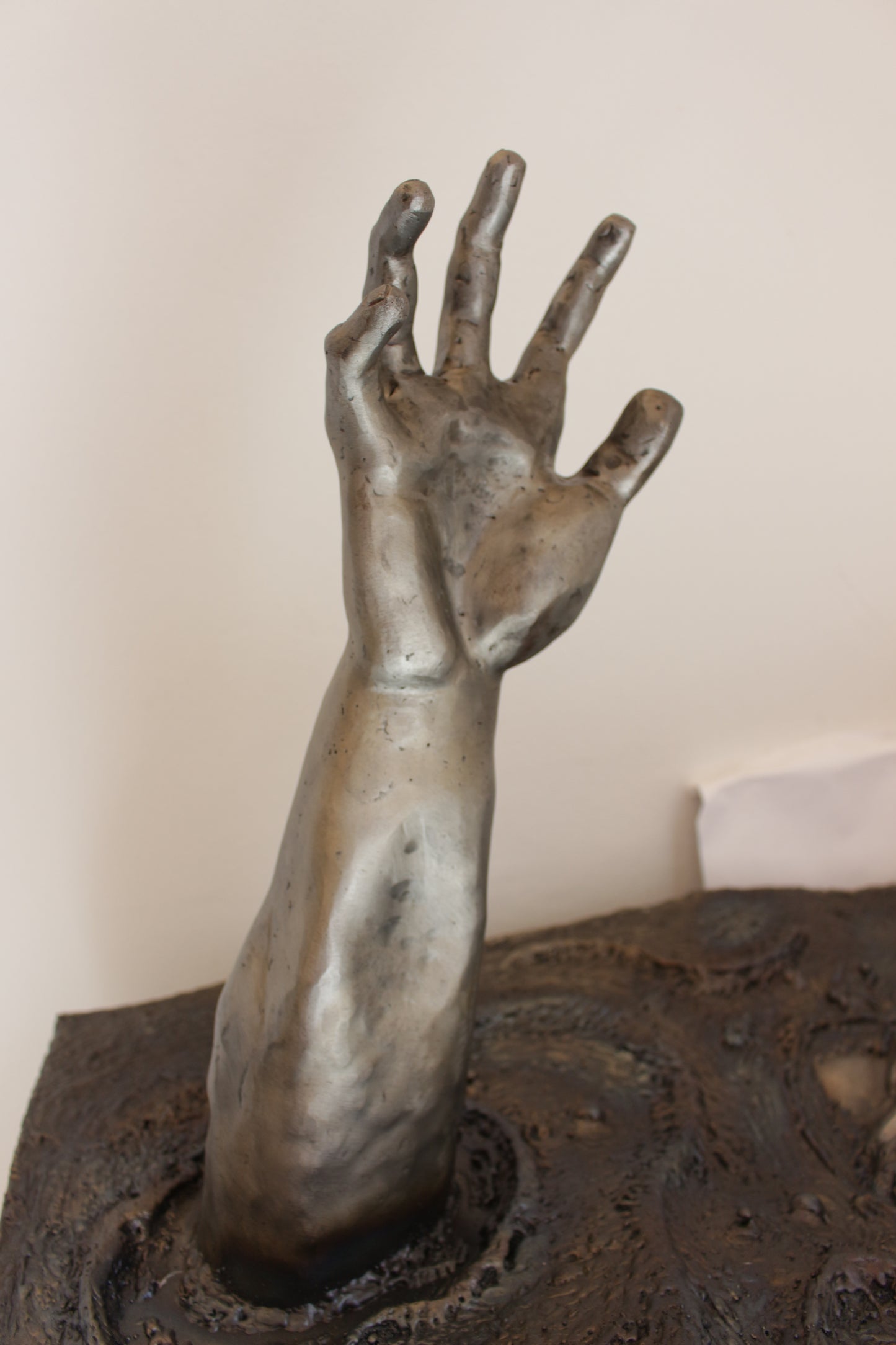
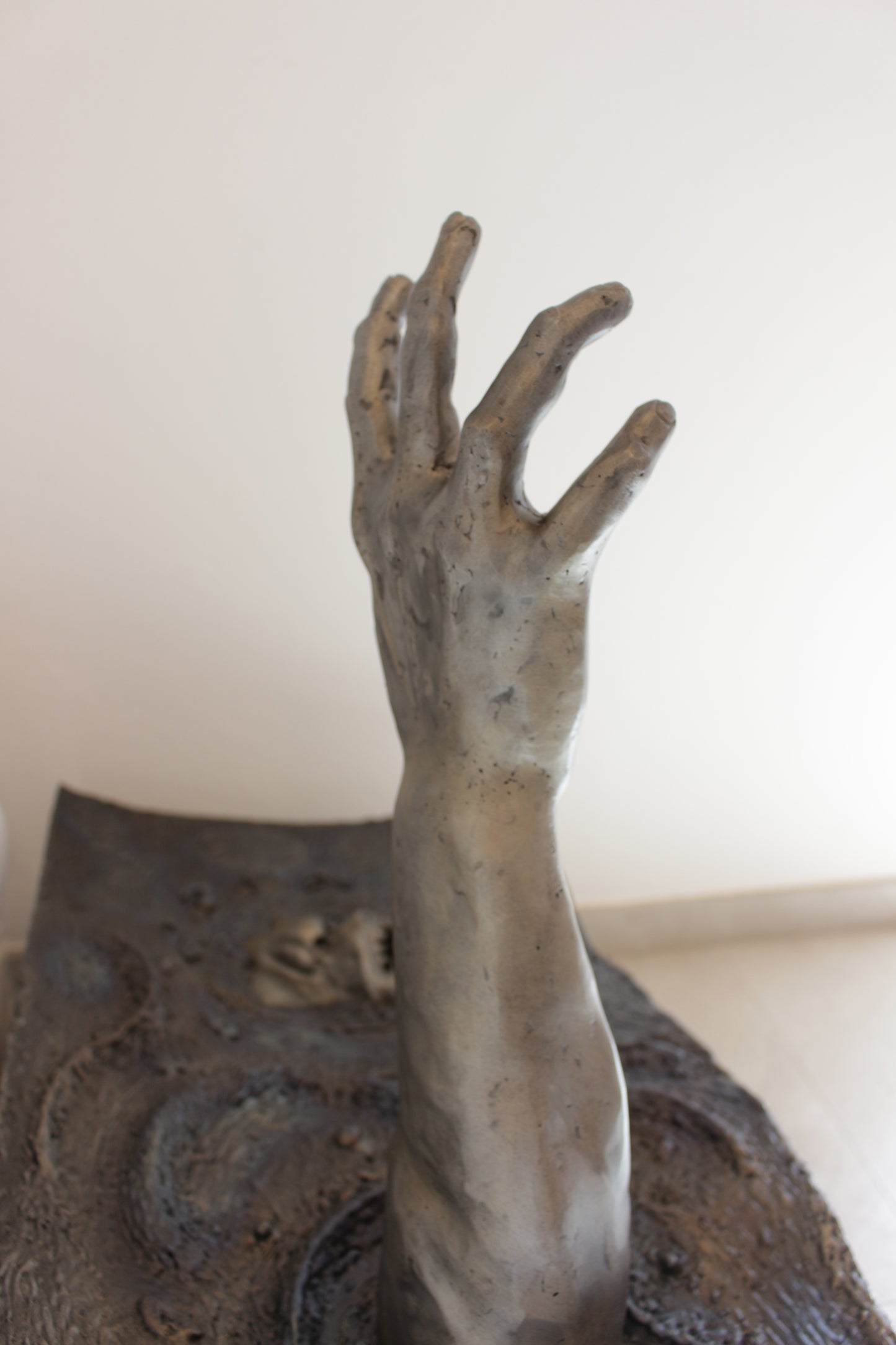
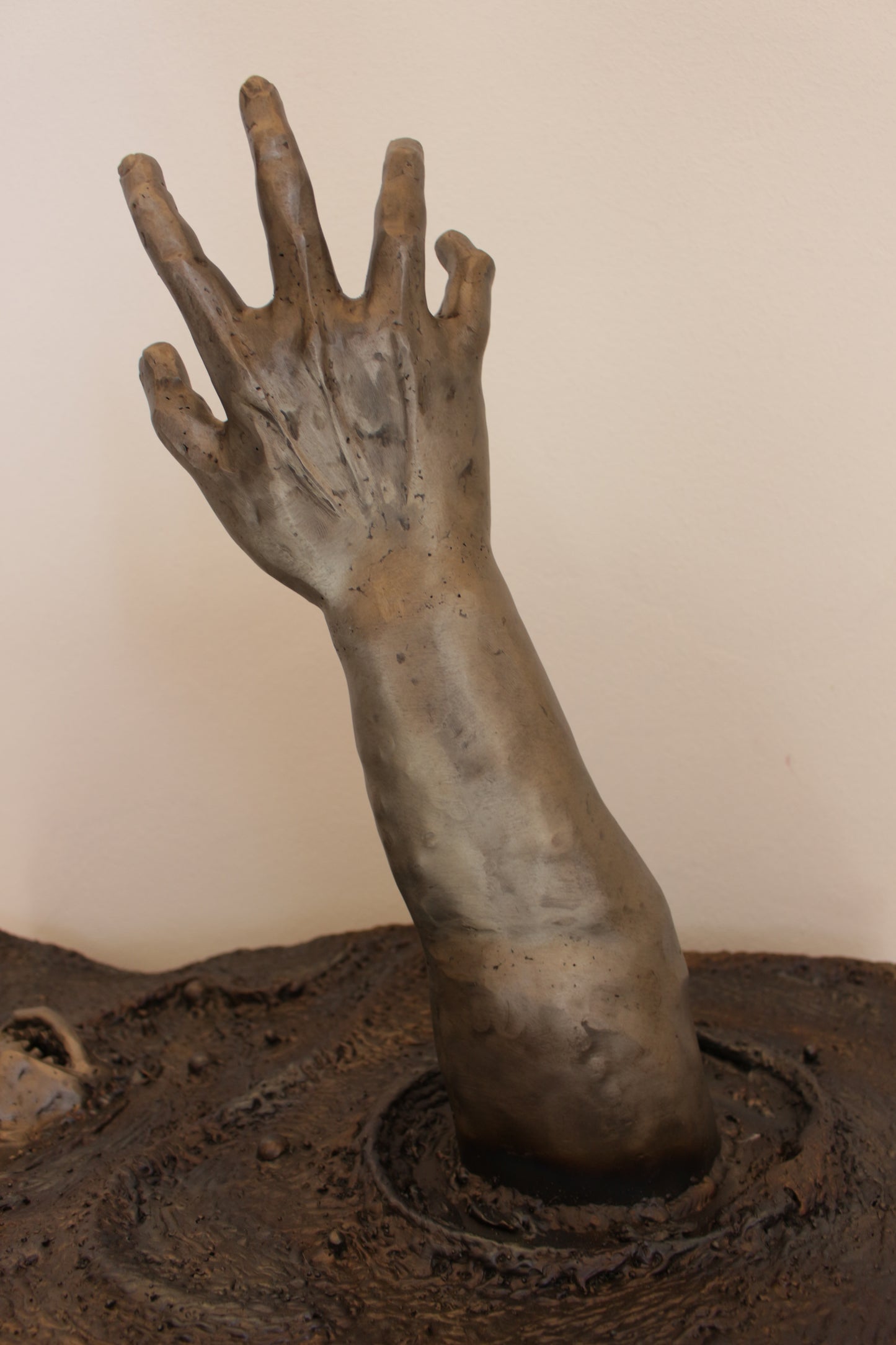
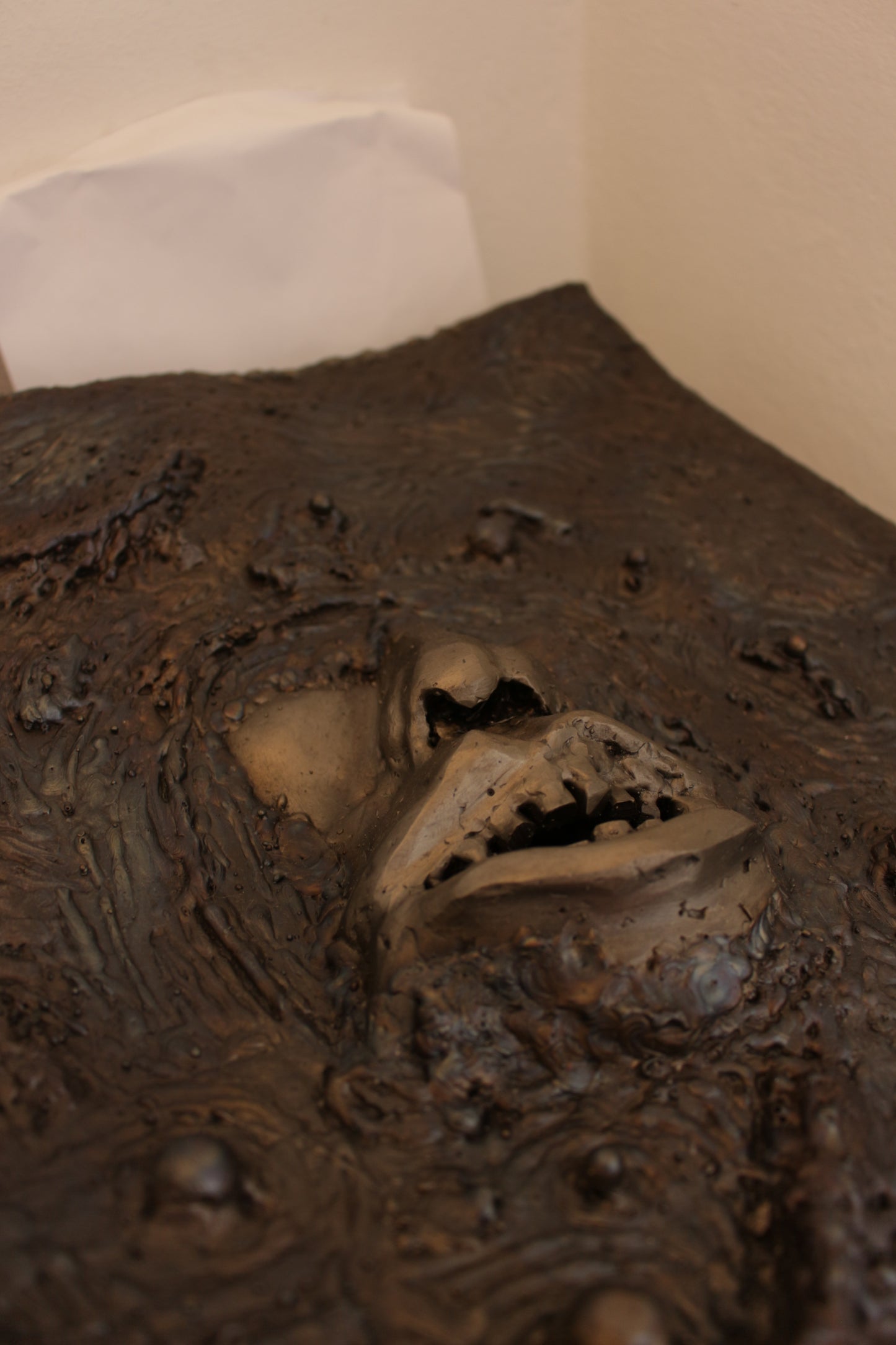
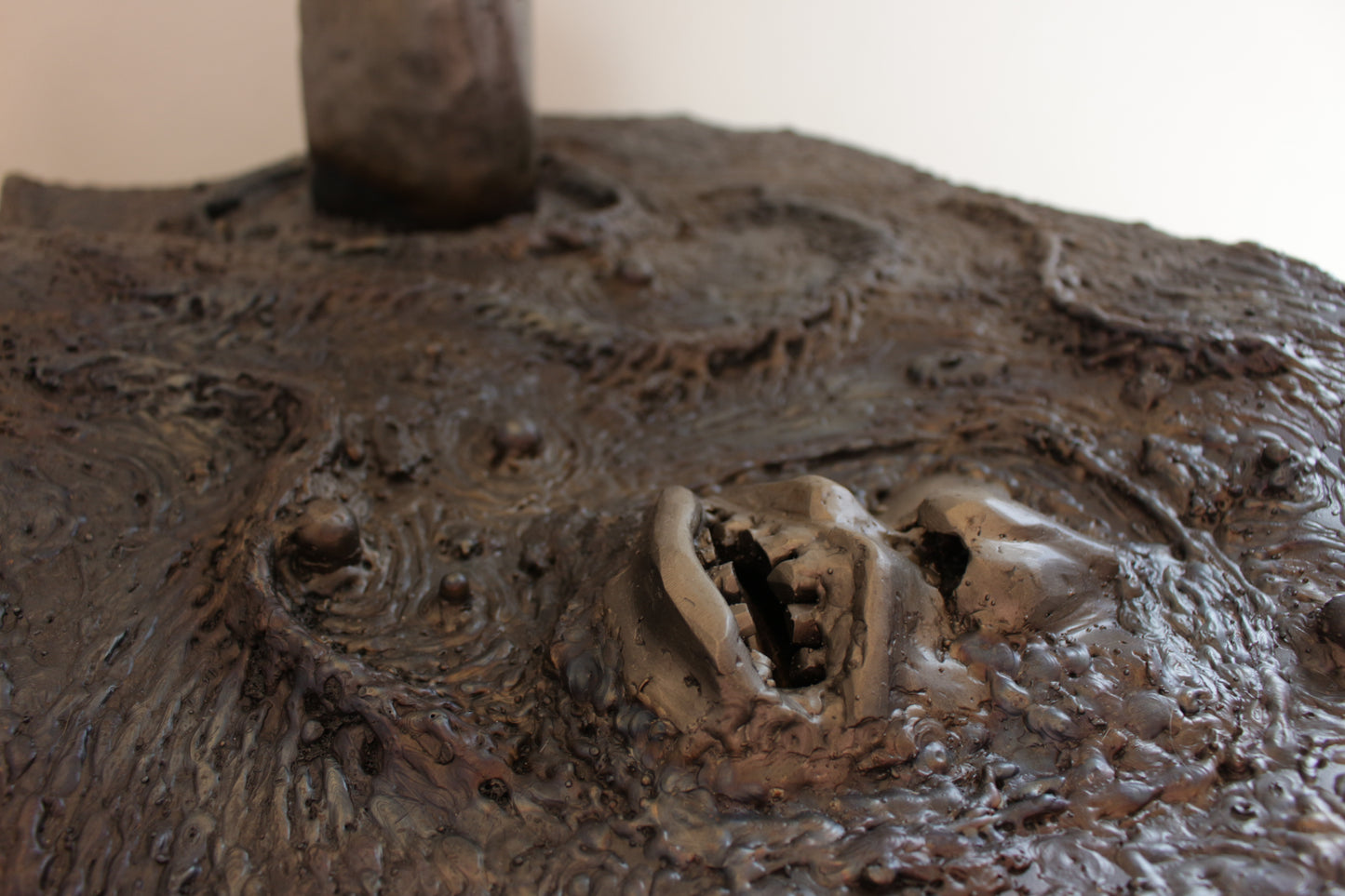
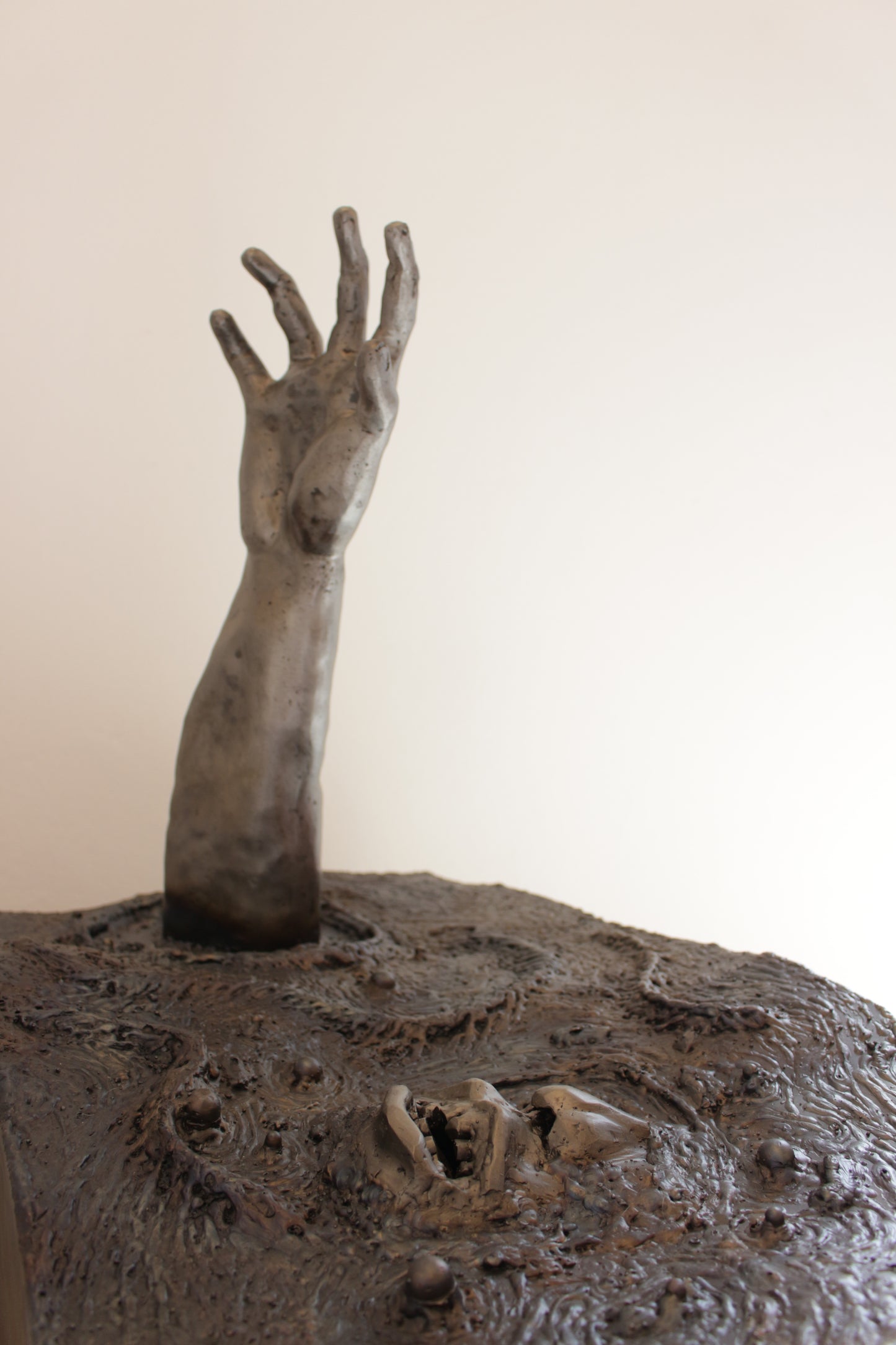
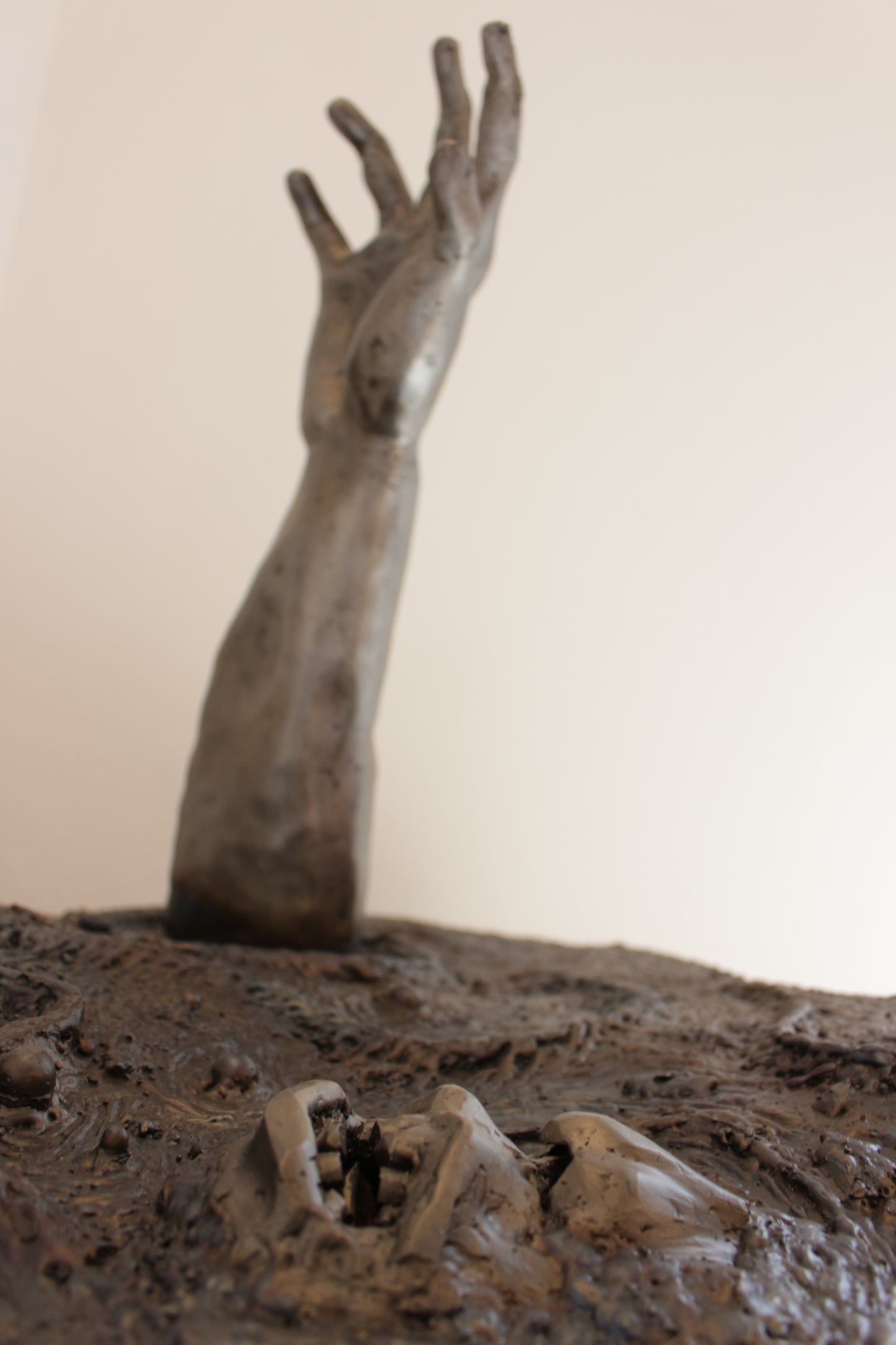
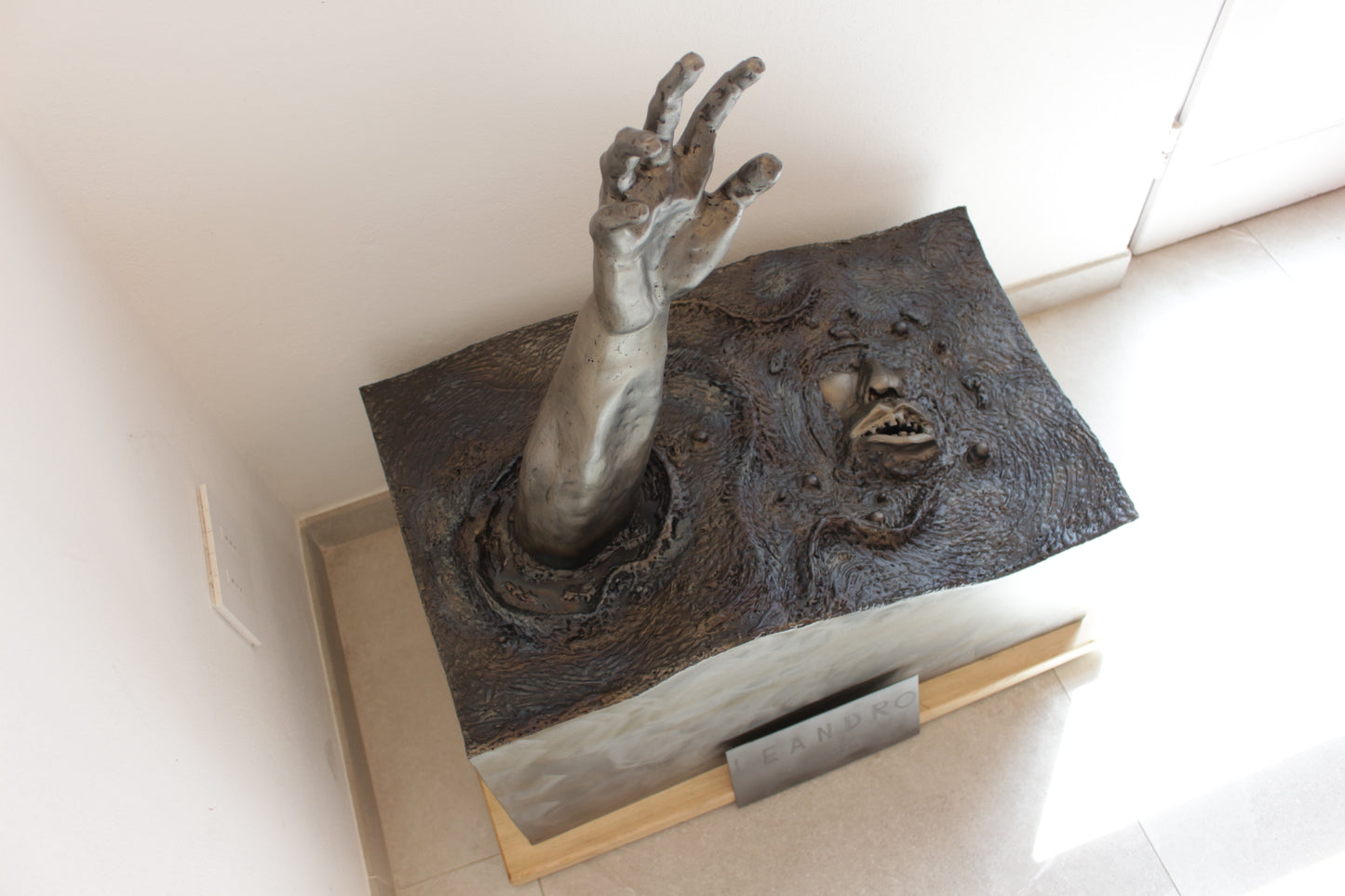
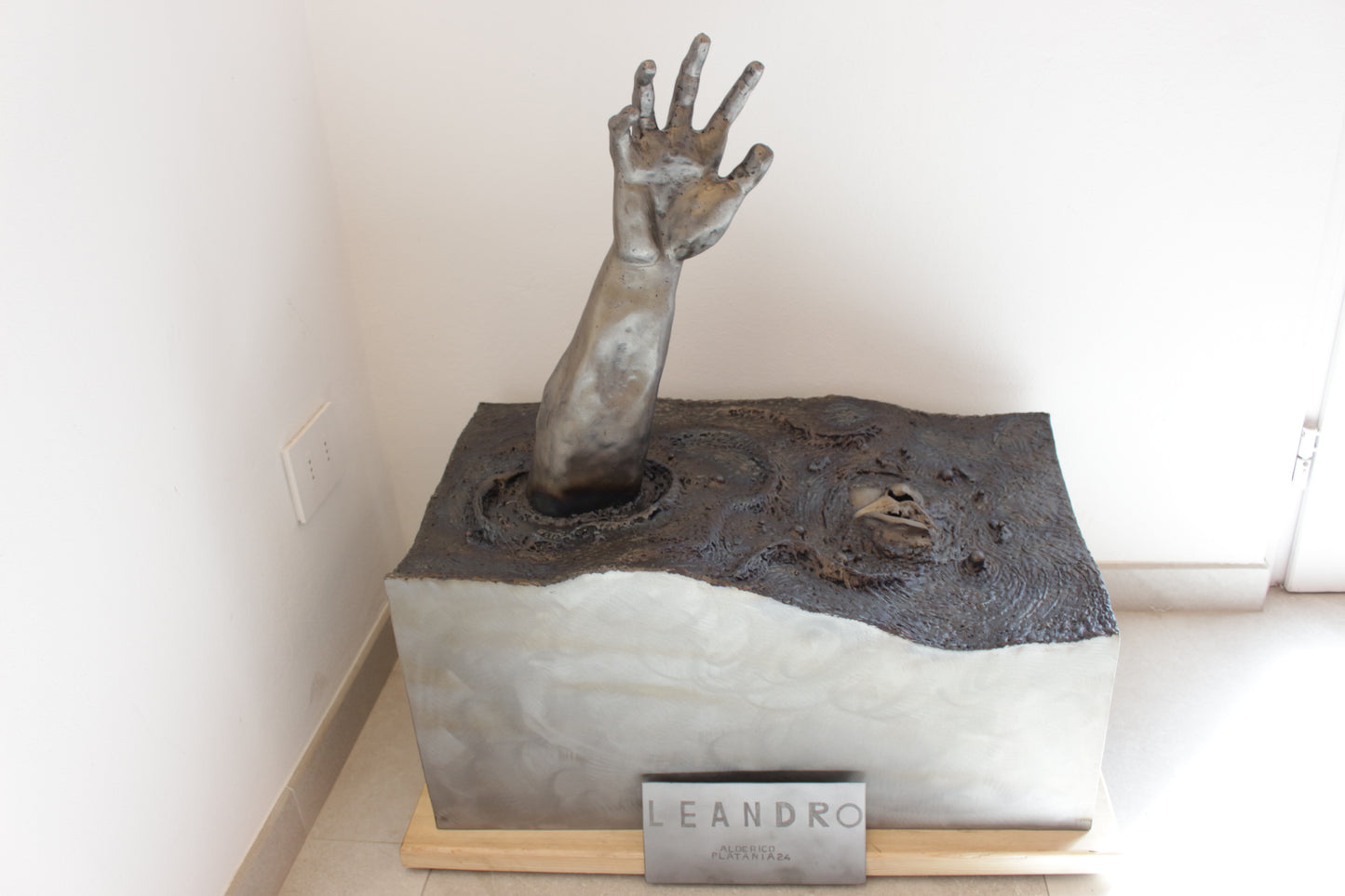
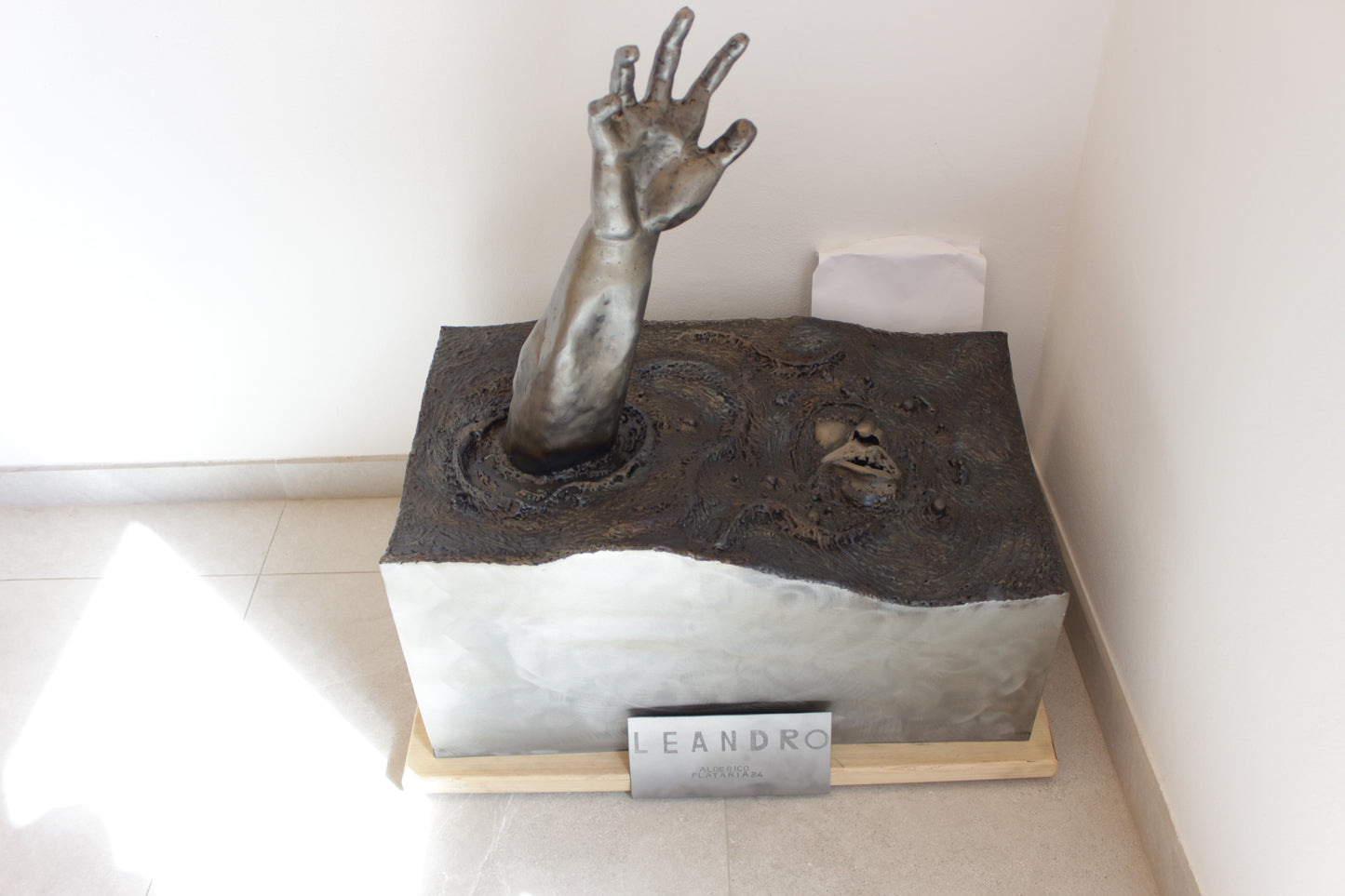
The work depicts a human figure drowning. Only part of the face and one arm reaching outward emerge from the body: a request for help that is still possible, but at risk of going unanswered.
The title refers to the myth of Leander, who would swim across the Hellespont every night following the light lit by Hero (his beloved). During a storm, that light went out without Hero noticing, and, having lost his reference point, Leander died at sea. In my work, that light becomes a symbol of affection, care, and the presence of others: something that can sustain a person, but whose absence, distraction, or inability to recognize a call for help can make suffering even deeper.
The work also possesses an autobiographical component, but it is not intended to equate the artist’s personal pain with the literal death of those who lose their lives. Its meaning is meant to be transversal: starting from an intimate condition to question a broader form of indifference toward human suffering.
We live in an age where we continuously witness the deaths of others. We see migrants die in the Mediterranean in their attempt to reach a chance at a different life; we see men, women, and children in Palestine dying under bombs; we see wars, violence, and tragedies progressively turning into images we risk becoming accustomed to.
Constant exposure to pain can generate helplessness, distance, and desensitization. And it is precisely this loss of sensitivity that LEANDRO seeks to challenge.
The sculpture is placed on the ground, forcing the observer to stand physically above the drowning figure. The hand reaches into their space, almost asking them to participate. Thus, one is not merely witnessing a death: one is faced with someone who, at least symbolically, is still asking for help.
The question that remains does not only concern the one who is drowning, but the one who is watching.
How capable are we still of seeing the suffering of others?
And when someone reaches out a hand, are we still able to recognize it?
Technique and production
Work in wrought iron and mixed media, entirely handmade from common iron.
The surface has no opaque paint: the material remains visible and is protected solely by a transparent finish, keeping the character of the iron and the manual craftsmanship legible.