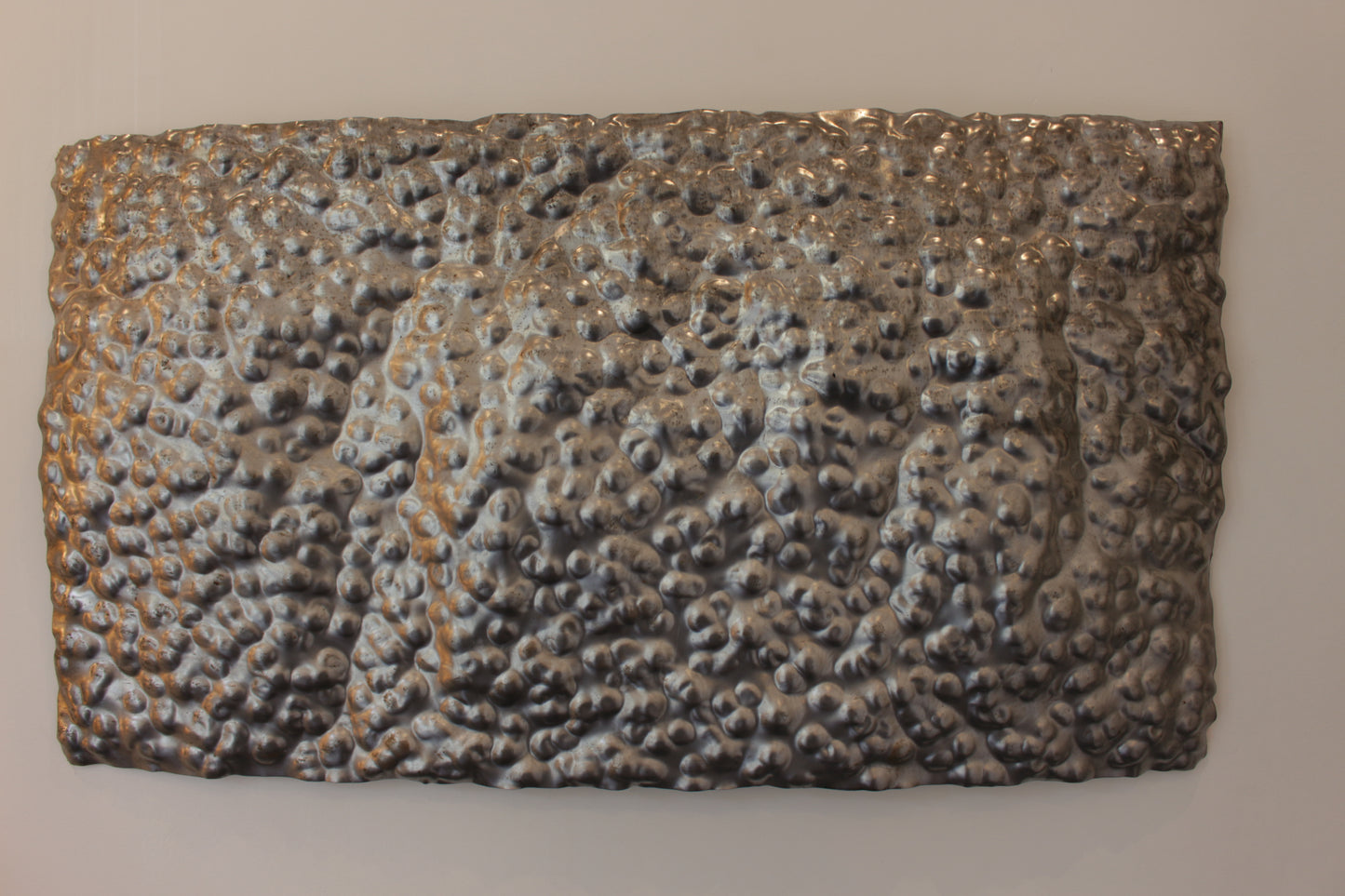
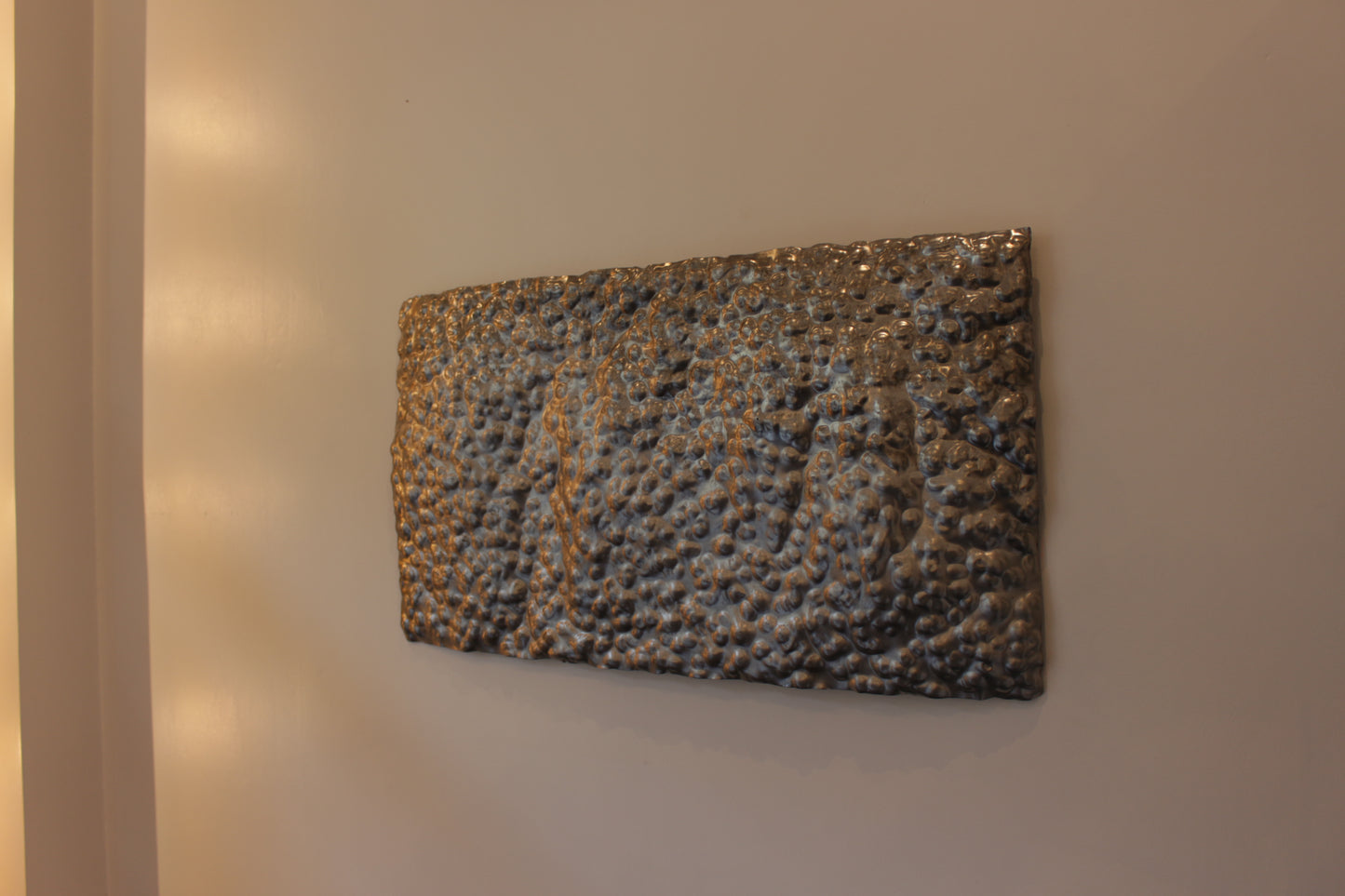
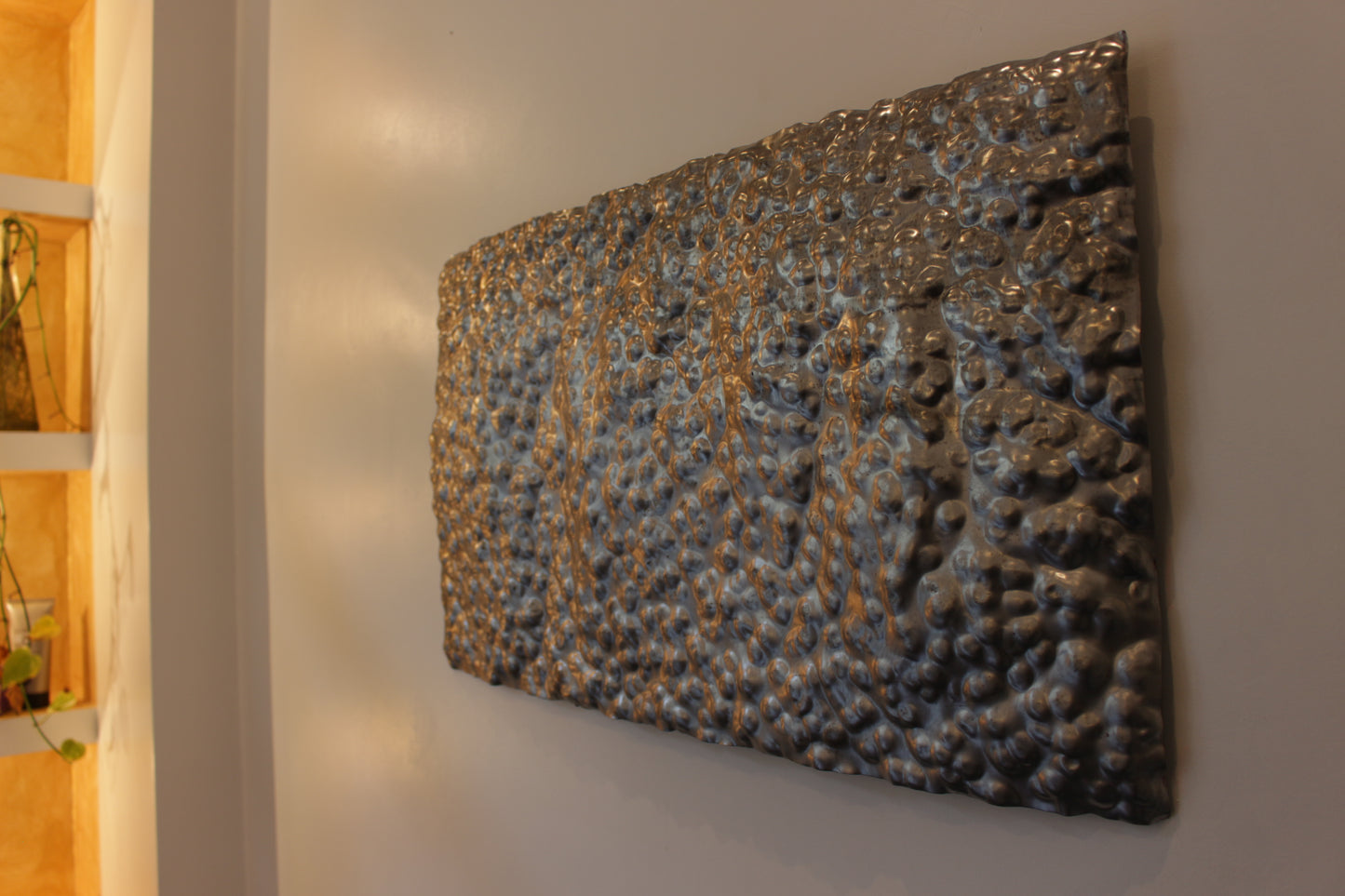
CROSTA IN BRAILLE N°1 represents a break from the figurative, iconographic, and symbolic component that characterizes much of my research.
It does not stem from an image or a defined archetype. It initially arises from a gesture.
In a moment of anger and frustration, unable to give a precise shape to what I was feeling, I began working on a sheet of metal by hammering it. The repeated gesture became a way to transfer a tension to the material that I could not represent otherwise at that moment: pressure, accumulation, irregularity, movement.
The instinctive origin of the work, however, does not coincide with its final execution.
From that first action, a slower and more conscious work on the surface began. Hammering , brushing, polishing, and subsequent processes were used to organize what had been born from the gesture, to control its variations, and to transform an initially chaotic material into an intentional surface.
The disorder from which the work originates is therefore not simply left to chance: it is observed, selected, and worked upon. Chaos remains present, but becomes compositional material.
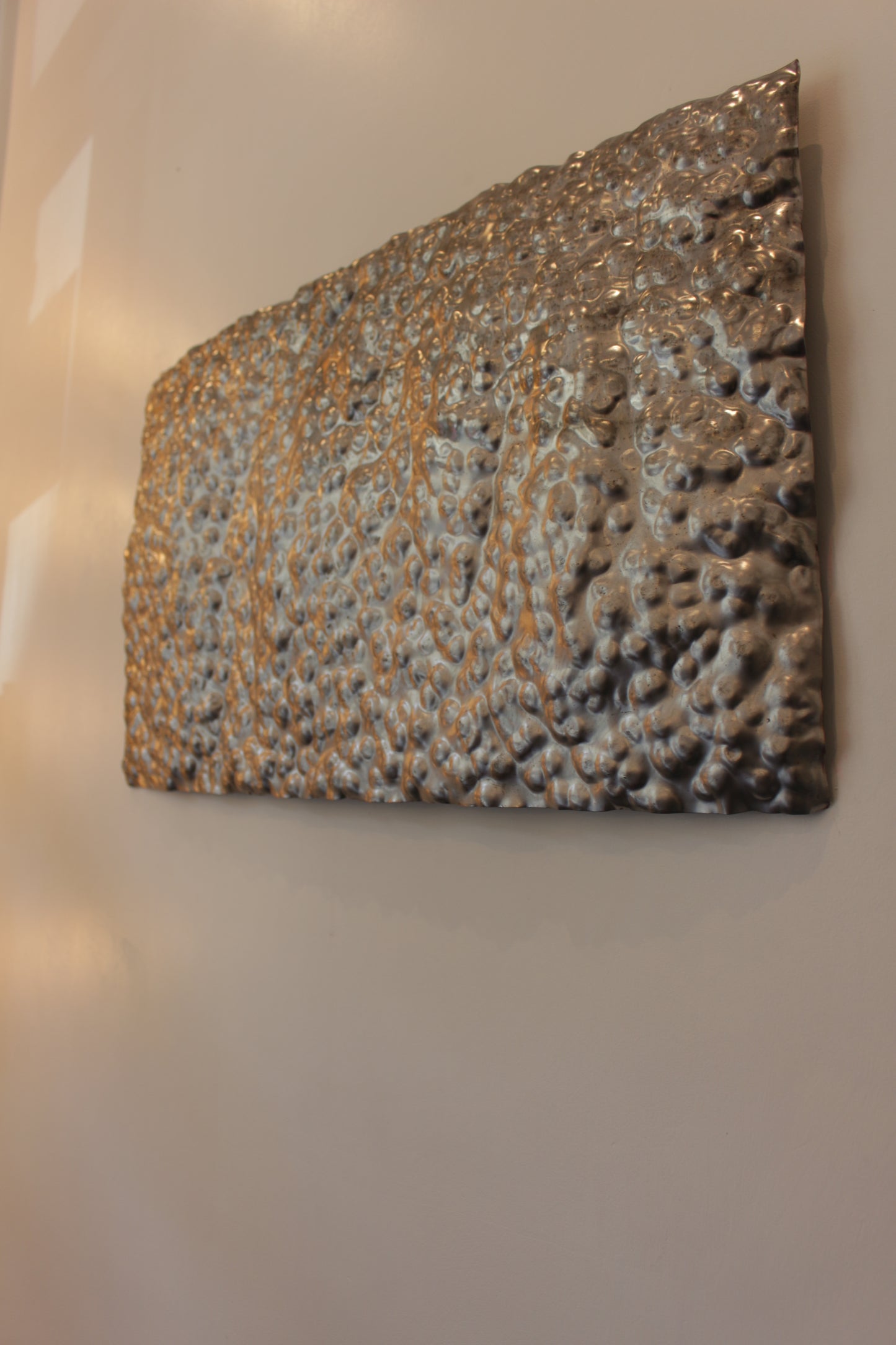
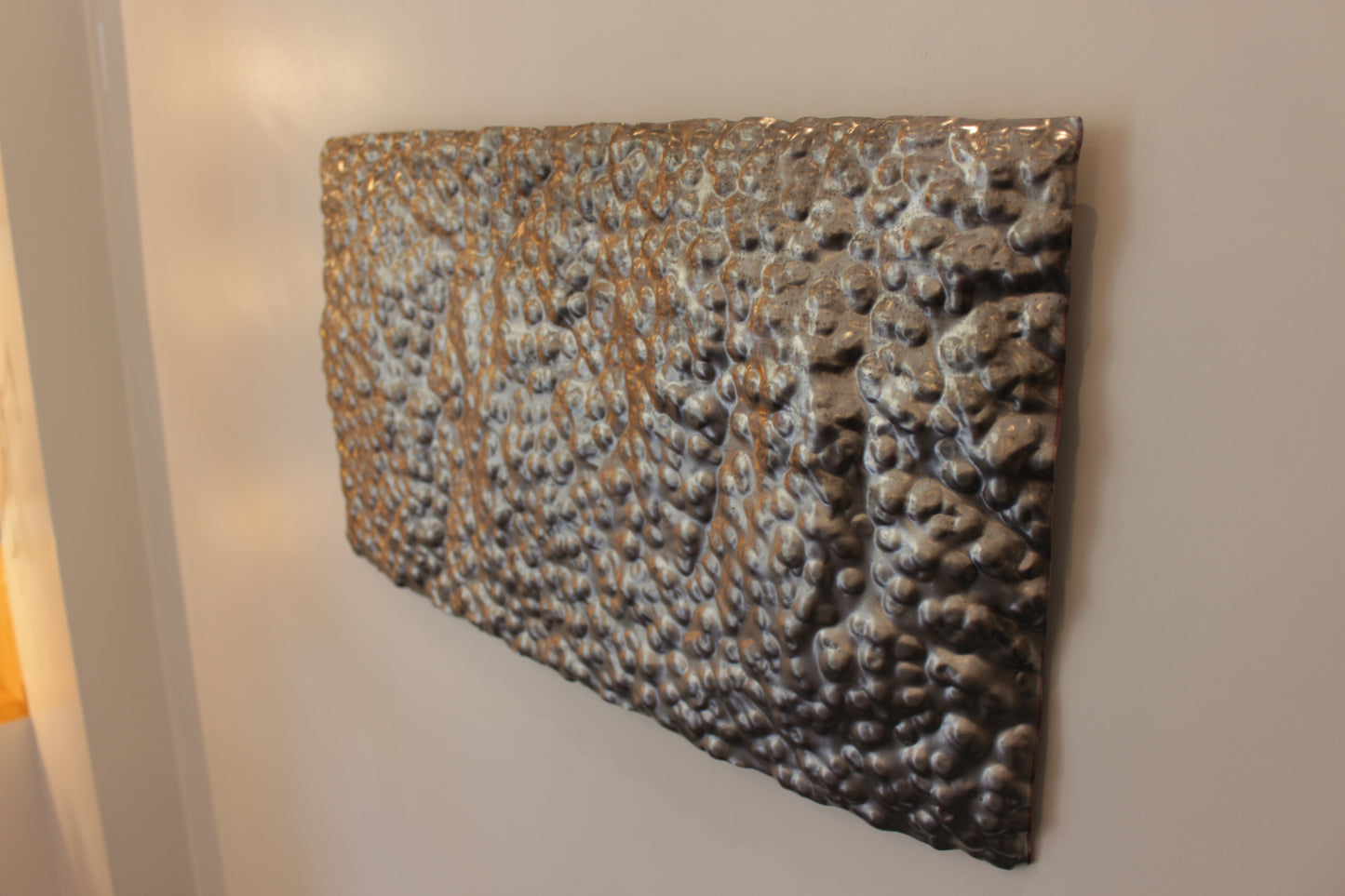
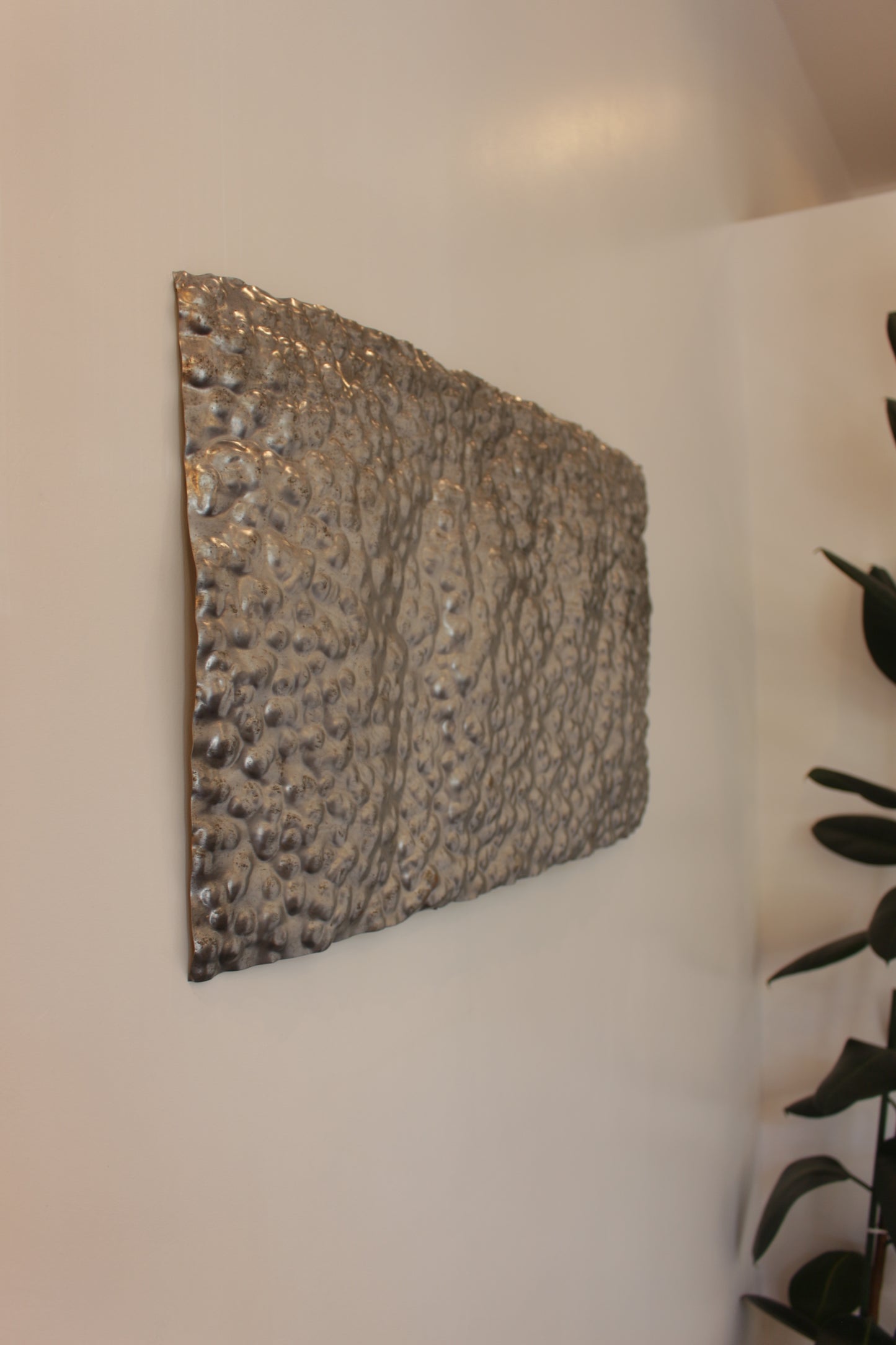
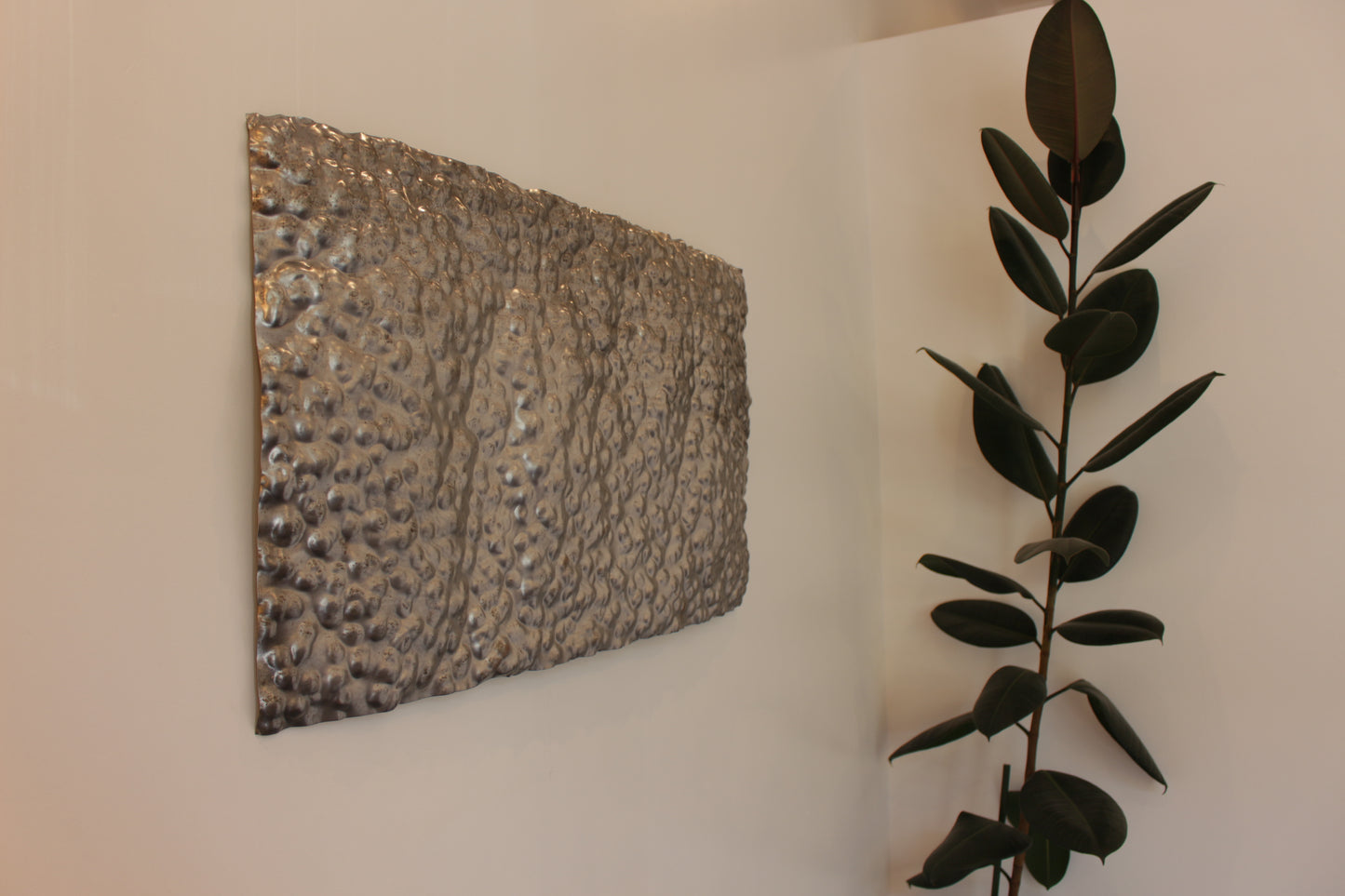
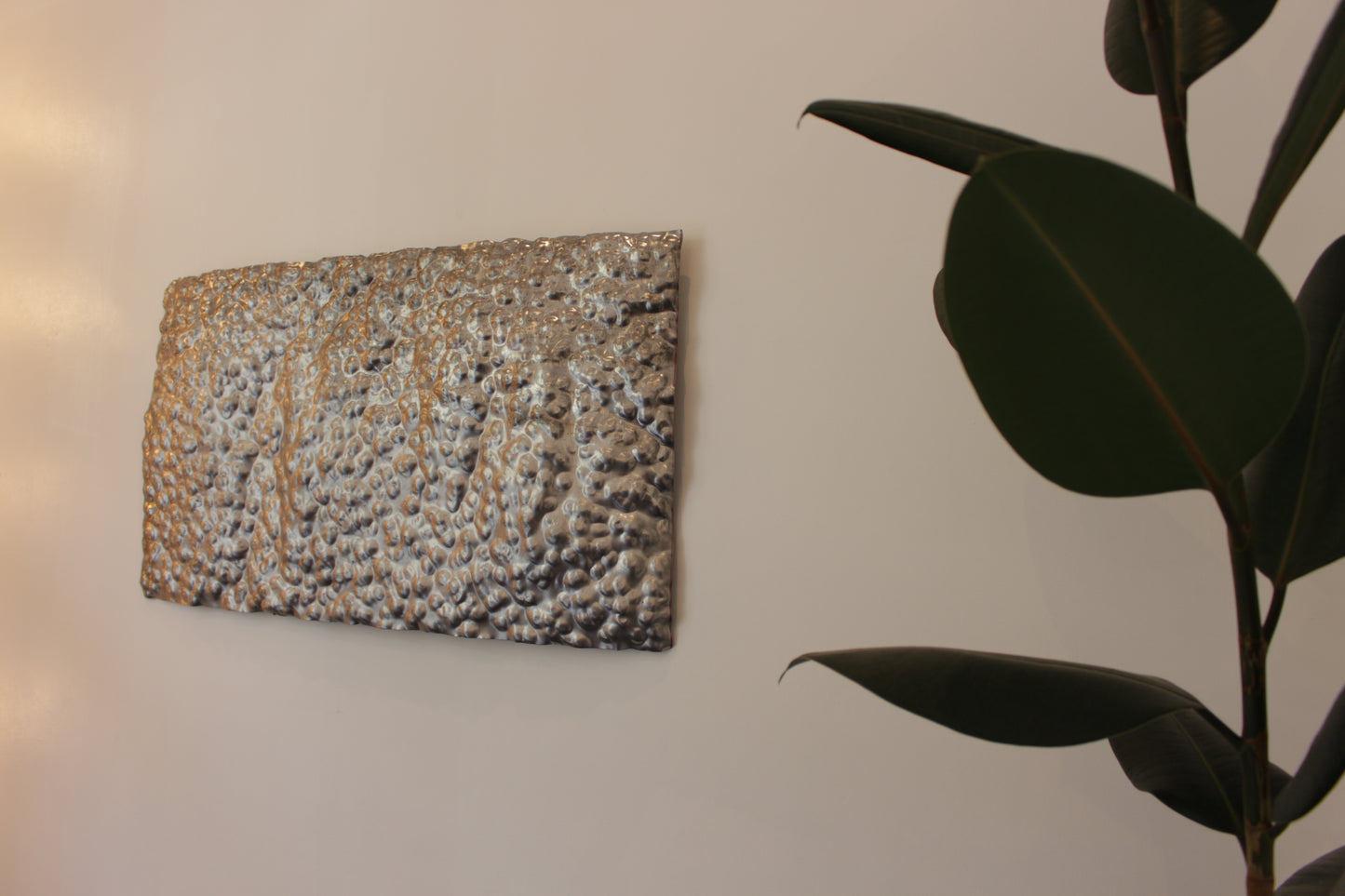
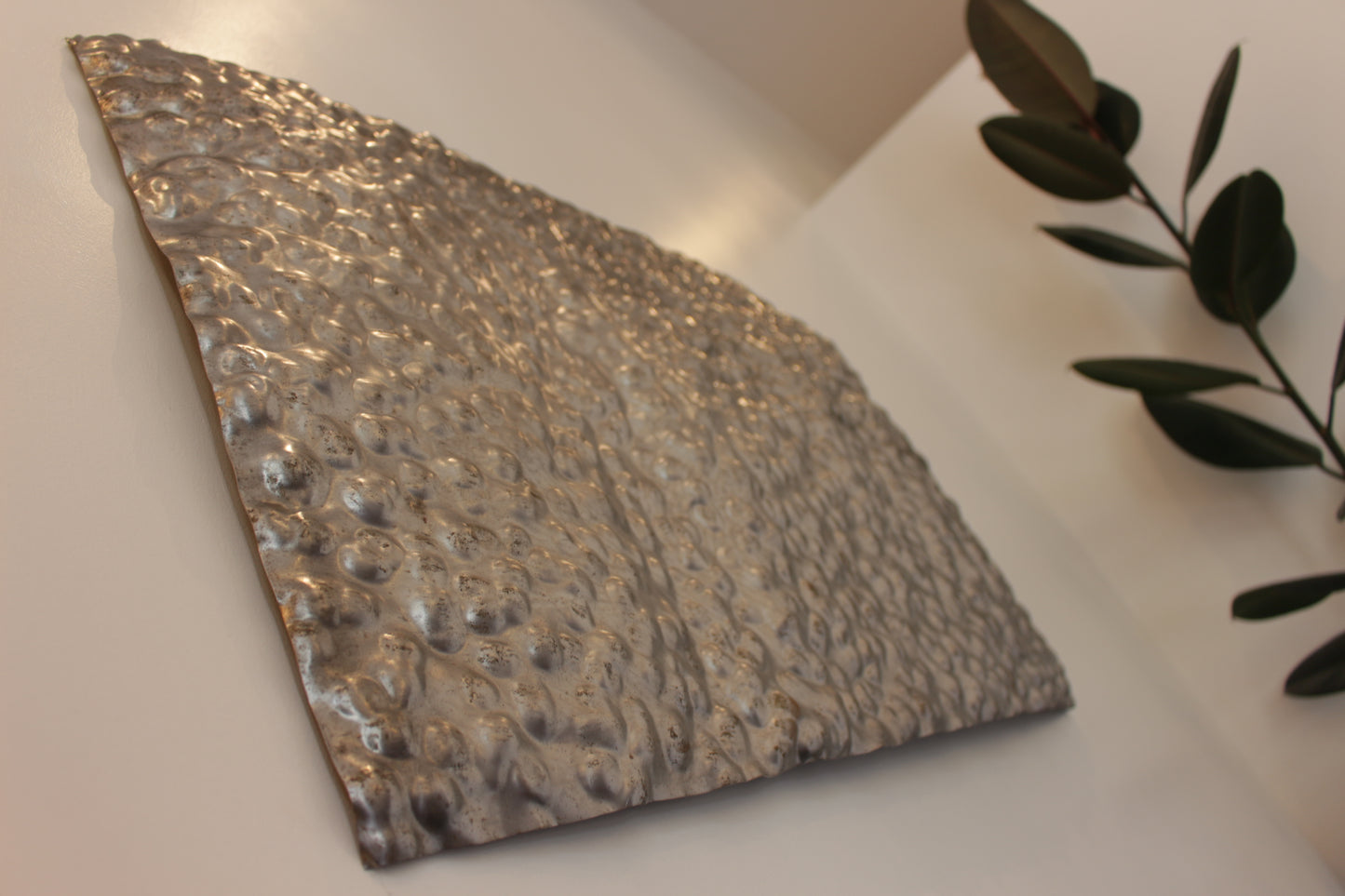
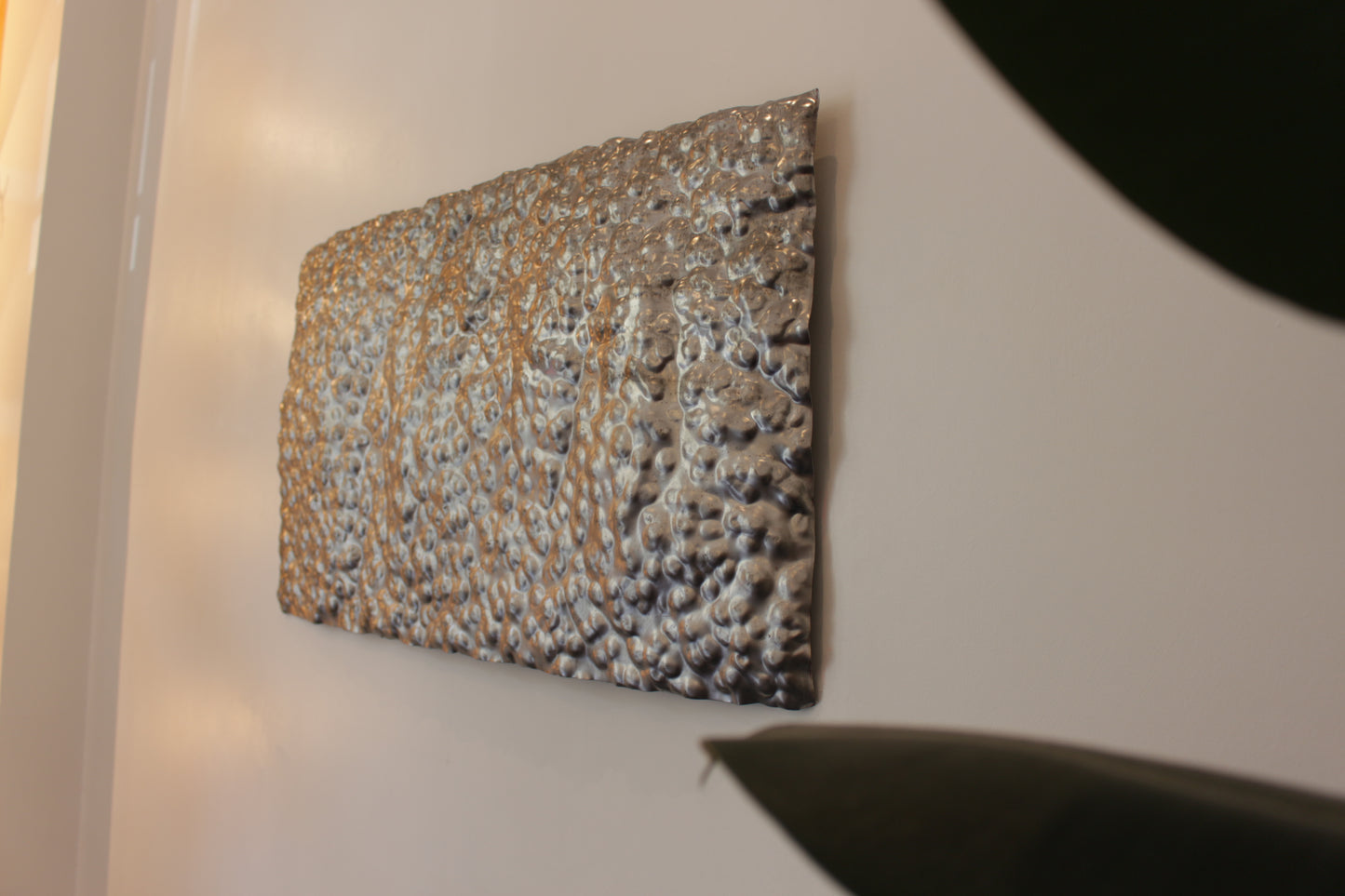
The final surface does not represent the emotion in an illustrative way. Rather, it preserves a physical trace of it: reliefs, depressions, densities, and irregularities build a kind of topography in which there is no pre-established figure or a single possible interpretation.
The work was also conceived to go beyond mere visual experience.
CROSTA IN BRAILLE must be touched.
The title stems precisely from the possibility of “reading” the surface through the fingers. There is no coded message to translate, but a material that communicates through relief, roughness, temperature, and variation.
The hand traverses what the eye observes in a different way, introducing a second level of knowledge of the work.
Furthermore, contact can modify it over time. Wear, the passing of hands, and surface alterations are not necessarily a deterioration foreign to the work, but can become part of its history: the trace left by the author is progressively joined by that of those who physically engage with the work.
CROSTA IN BRAILLE N°1 therefore arises from the encounter between impulse and control, chaos and research, gesture and construction.
It is an attempt to give consistency to an emotion that initially possessed no form and, subsequently, to transform it through work until it becomes a shareable experience.
Not just looking.
Touching, traversing, and leaving a trace.
Technique and execution
Abstract work made entirely by hand on an iron sheet through hammering and subsequent surface treatments.
The three-dimensionality arises from the manual deformation of the metal and is subsequently developed through a process of research on the material that includes brushing, polishing, and differentiated surface processing, until the sought-after visual and tactile balance is achieved.
The work is conceived as a wall element, but its enjoyment explicitly requires physical contact.
Any transformations produced by touch and the passage of time are considered part of the work's possible evolution.
CROSTA IN BRAILLE N°1 constitutes the first work of a non-figurative research destined to continue through further works in the series.