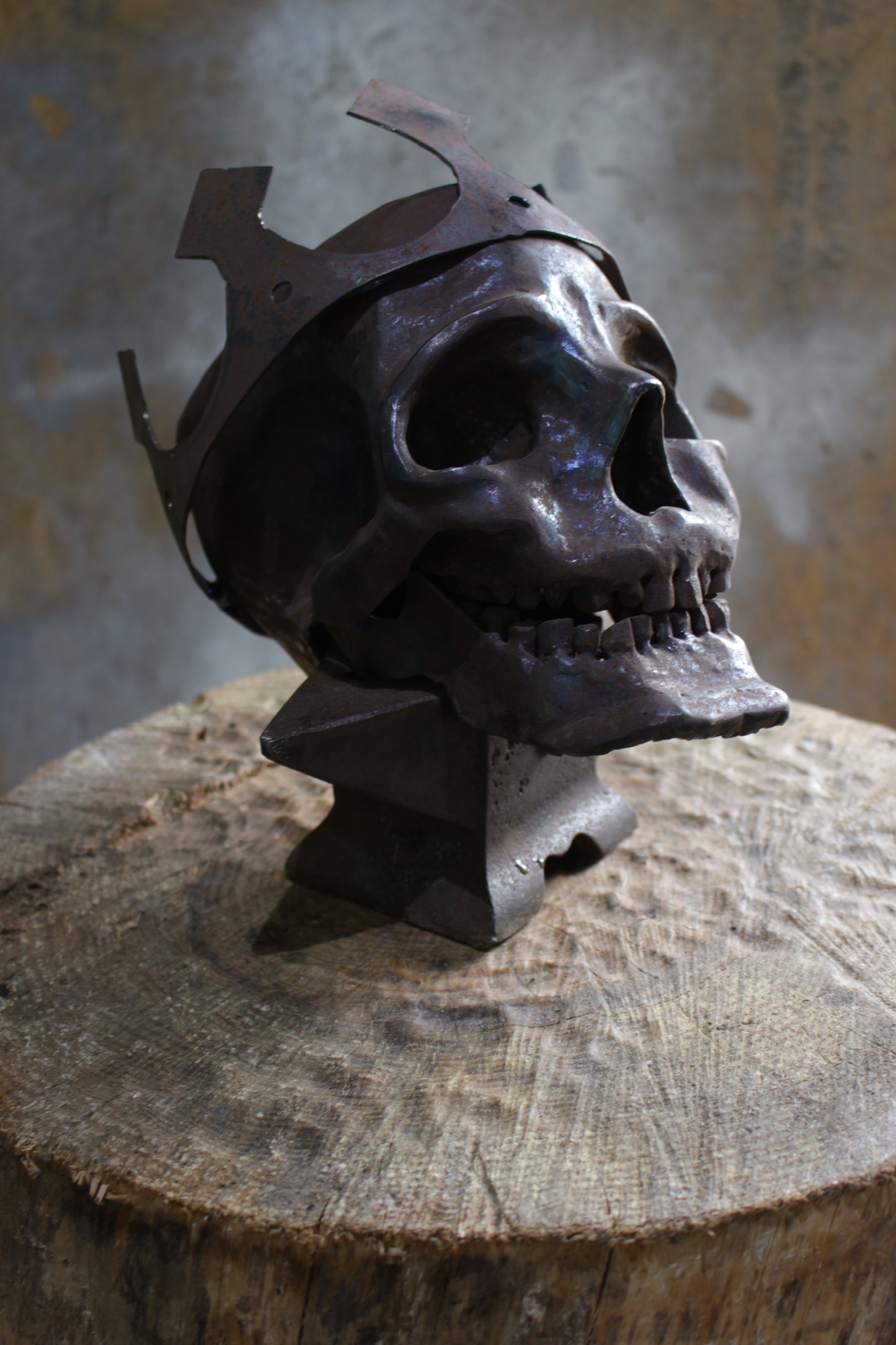
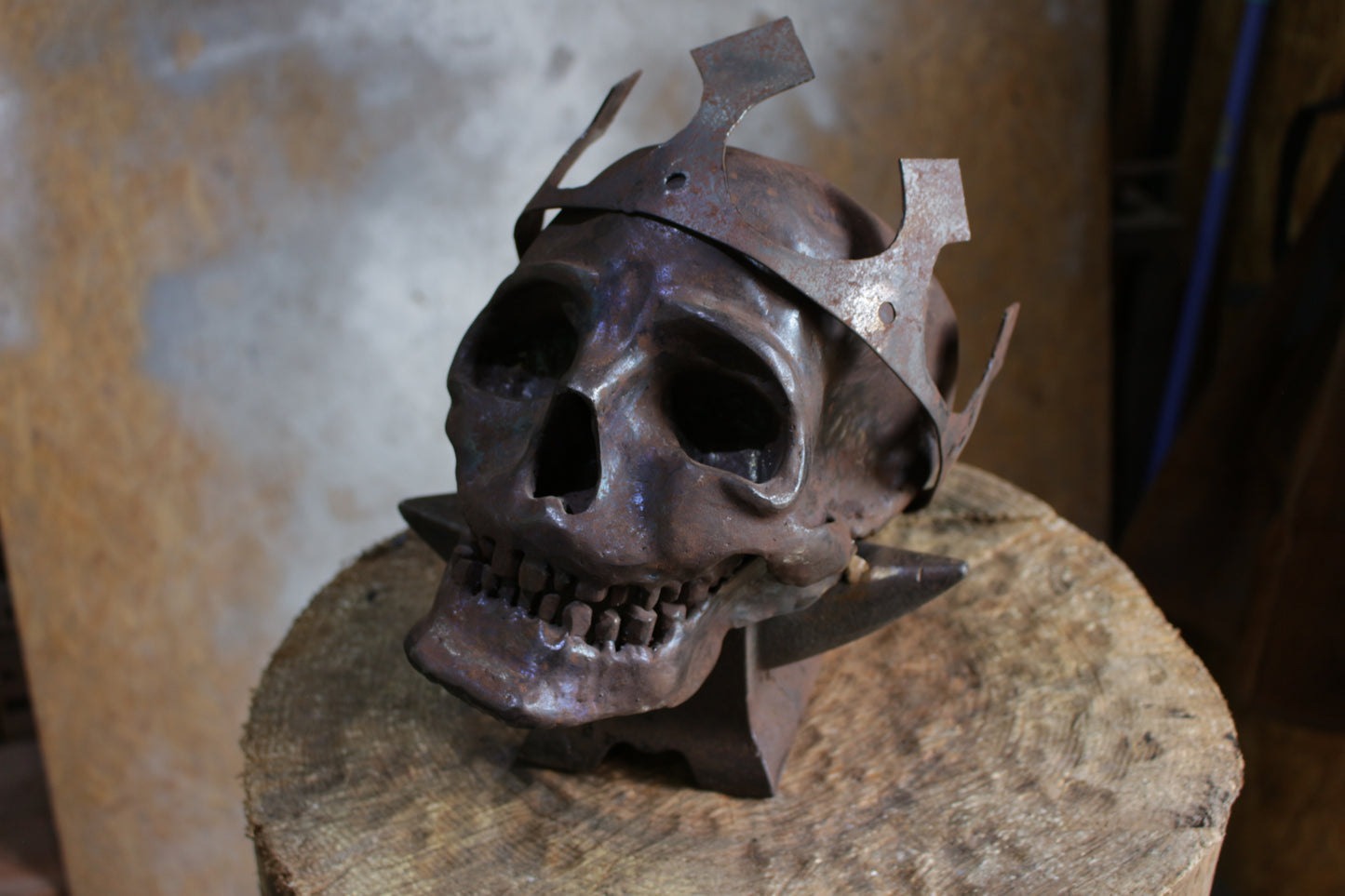
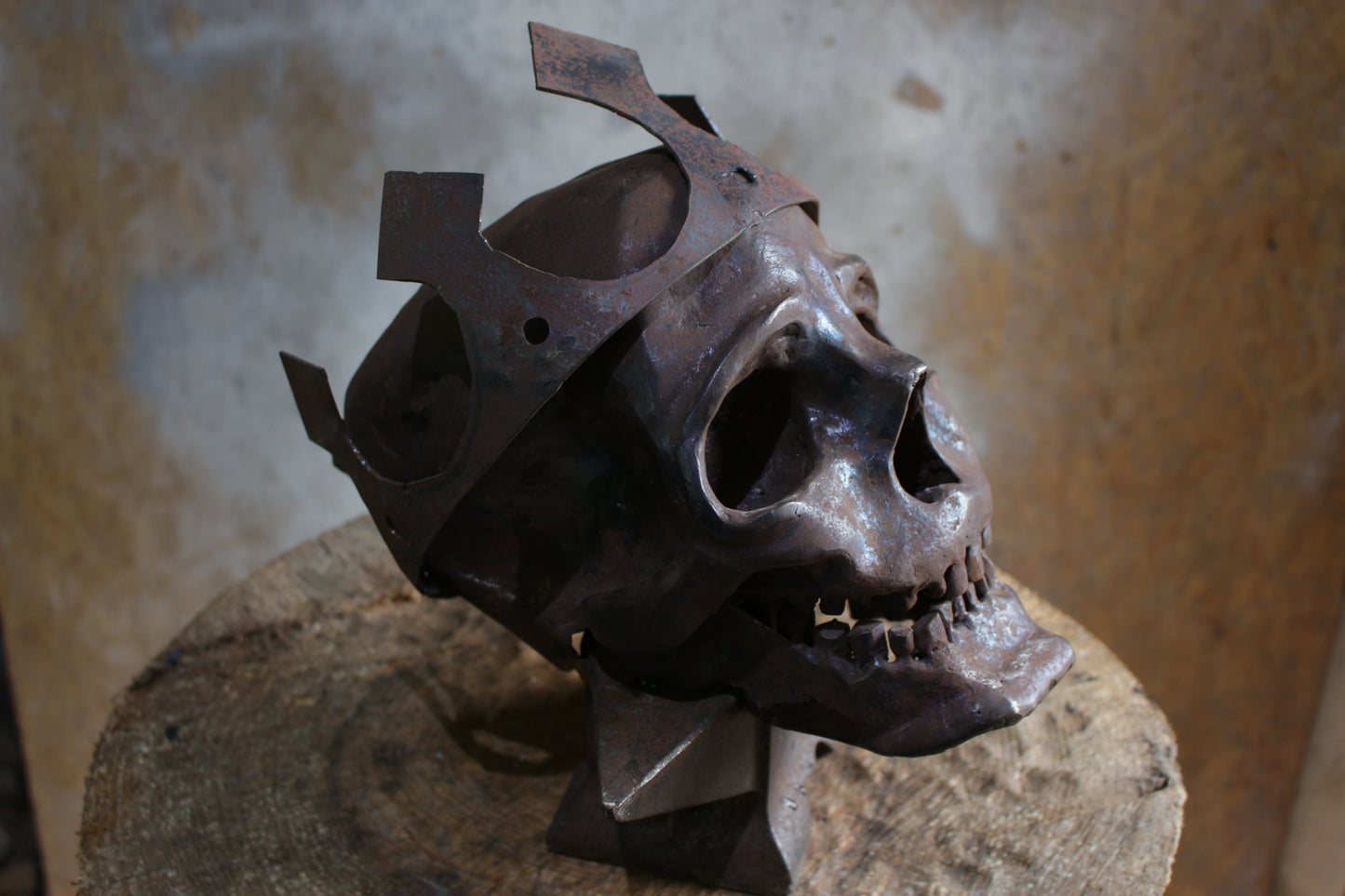
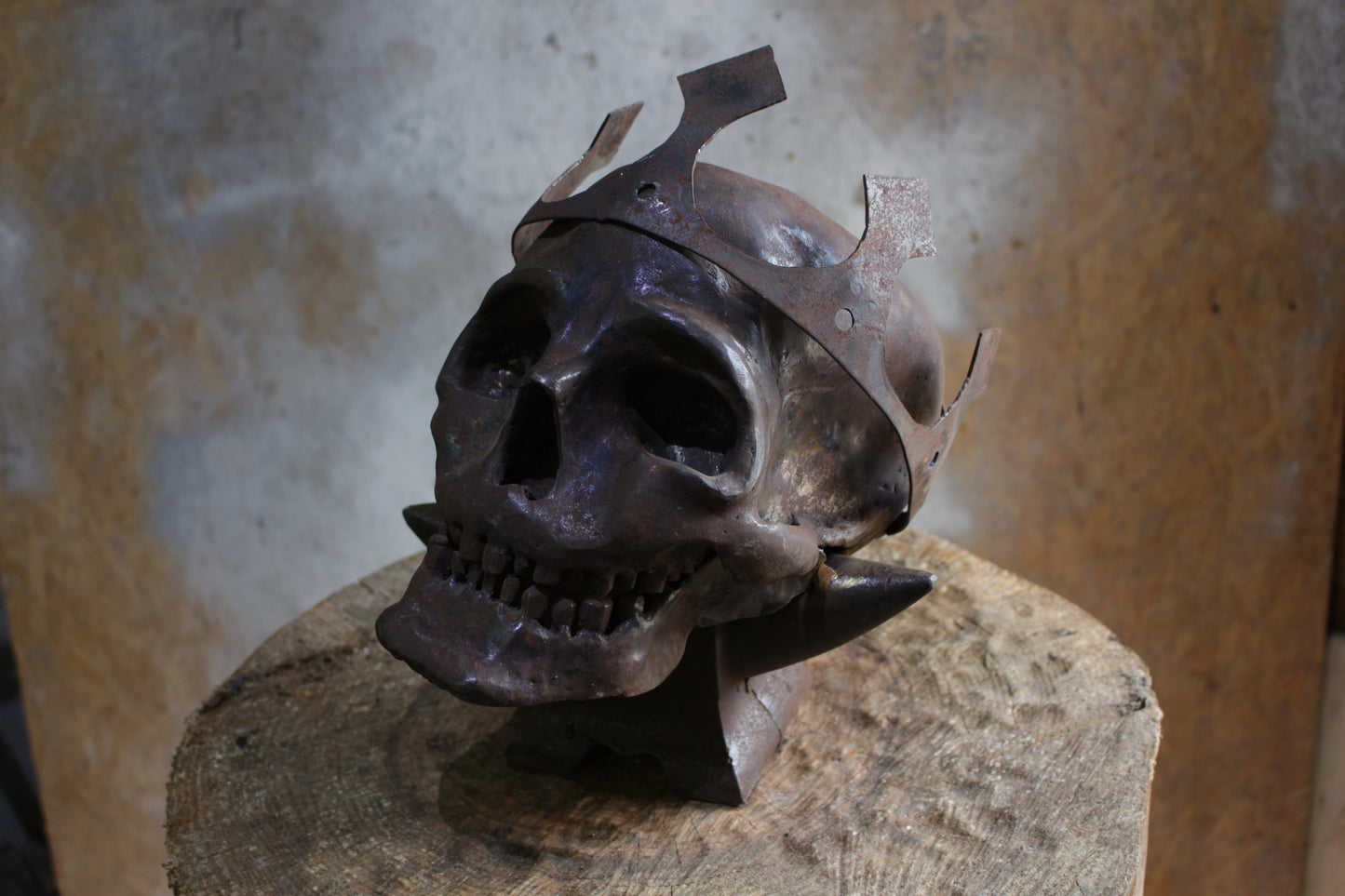
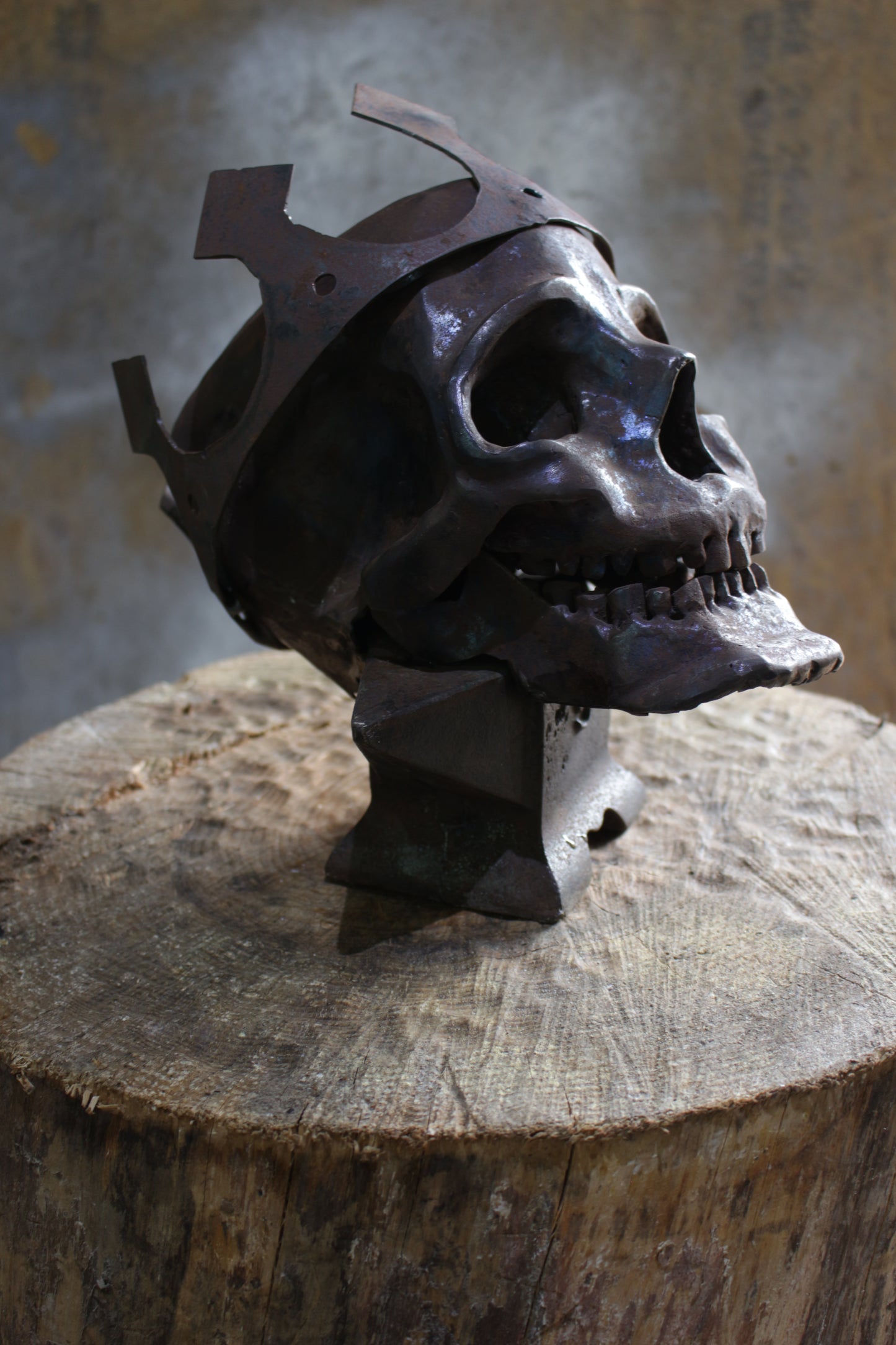
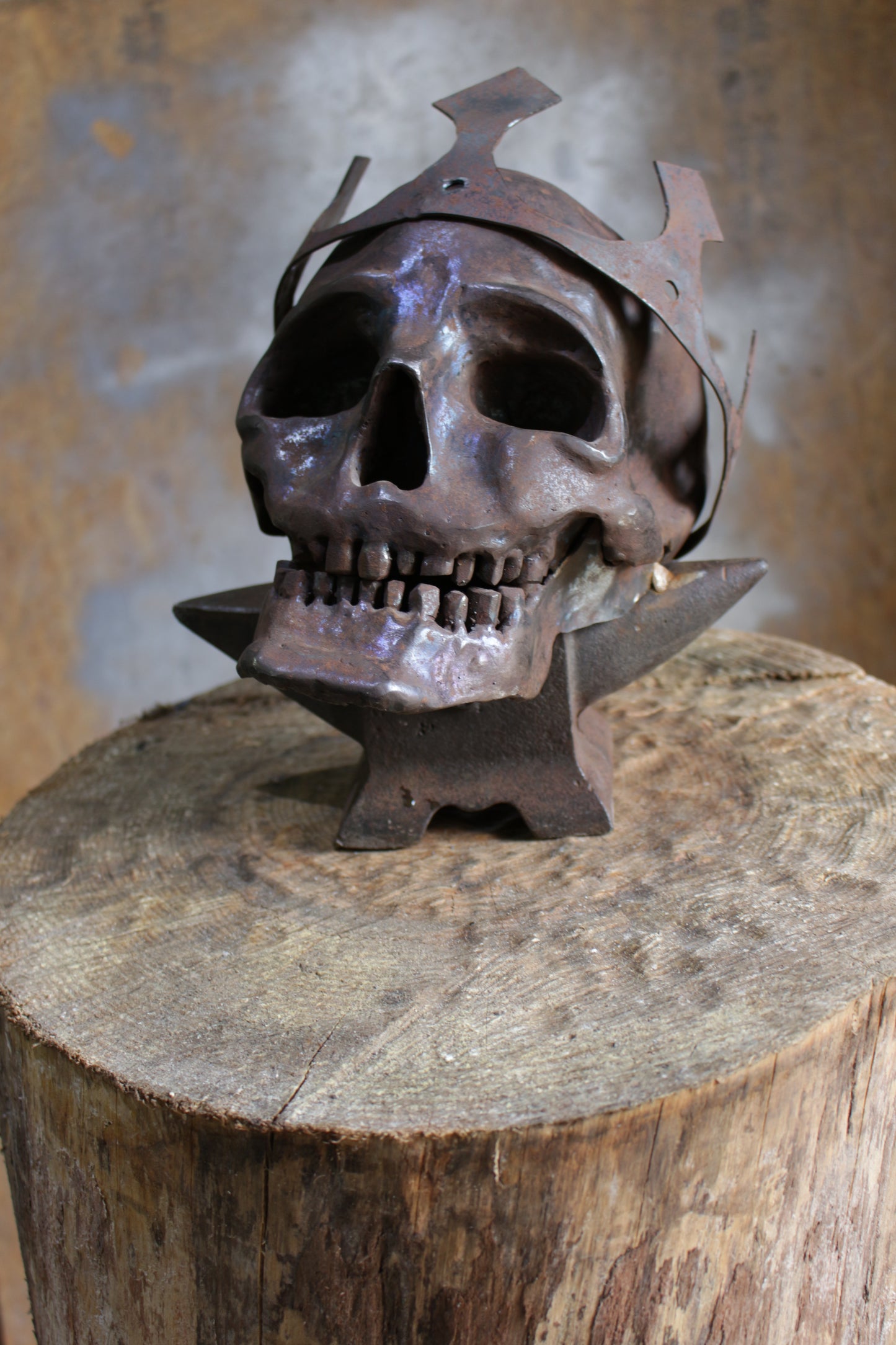
TANTALO originates as a reflection on the transience of existence and the reasons we choose to guide the time granted to us.
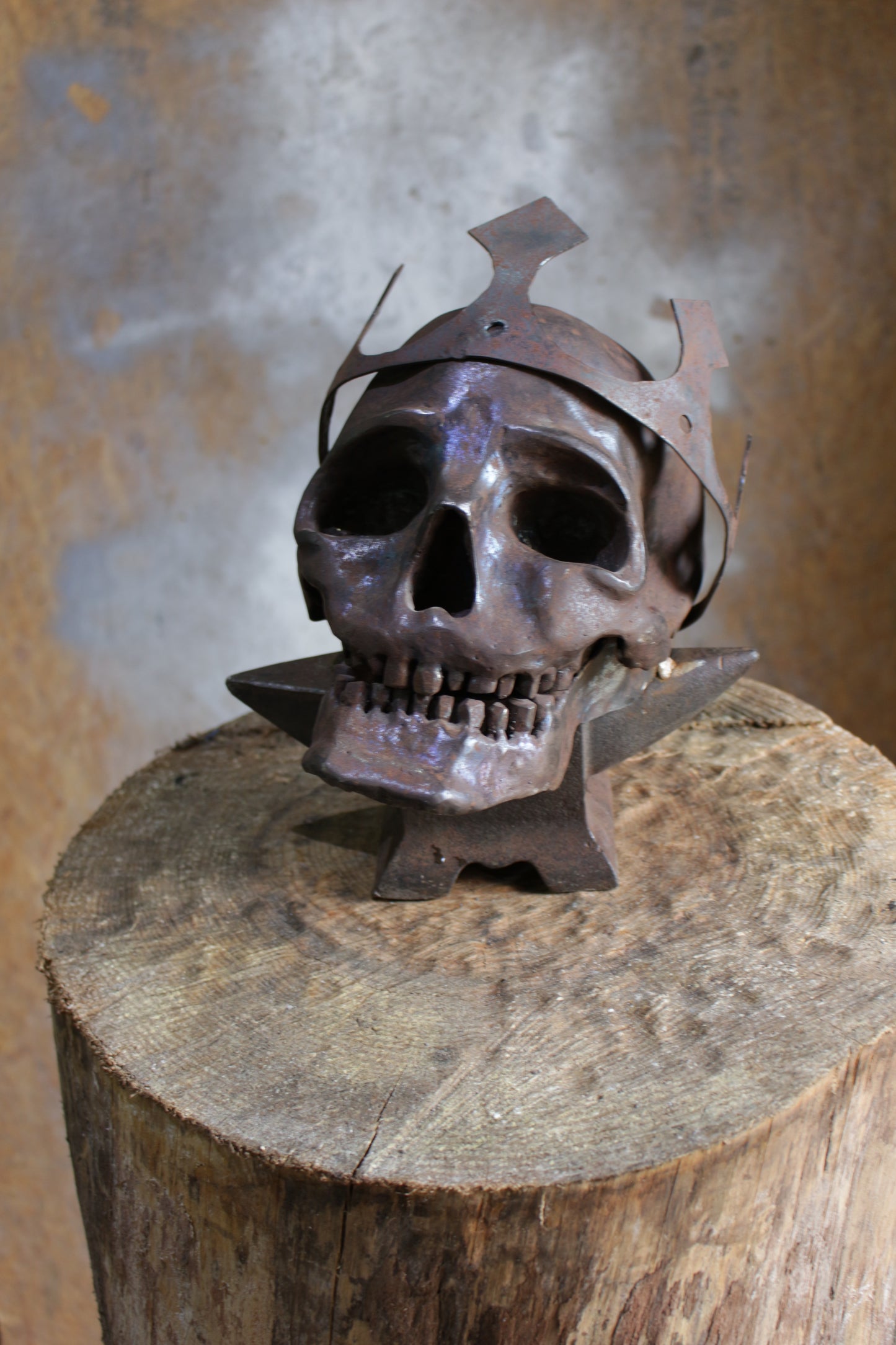
The skull confronts the observer with an inevitable conclusion: regardless of what we accumulate, the recognition we obtain, or the power we exercise, life retains a limit that renders every material achievement provisional.
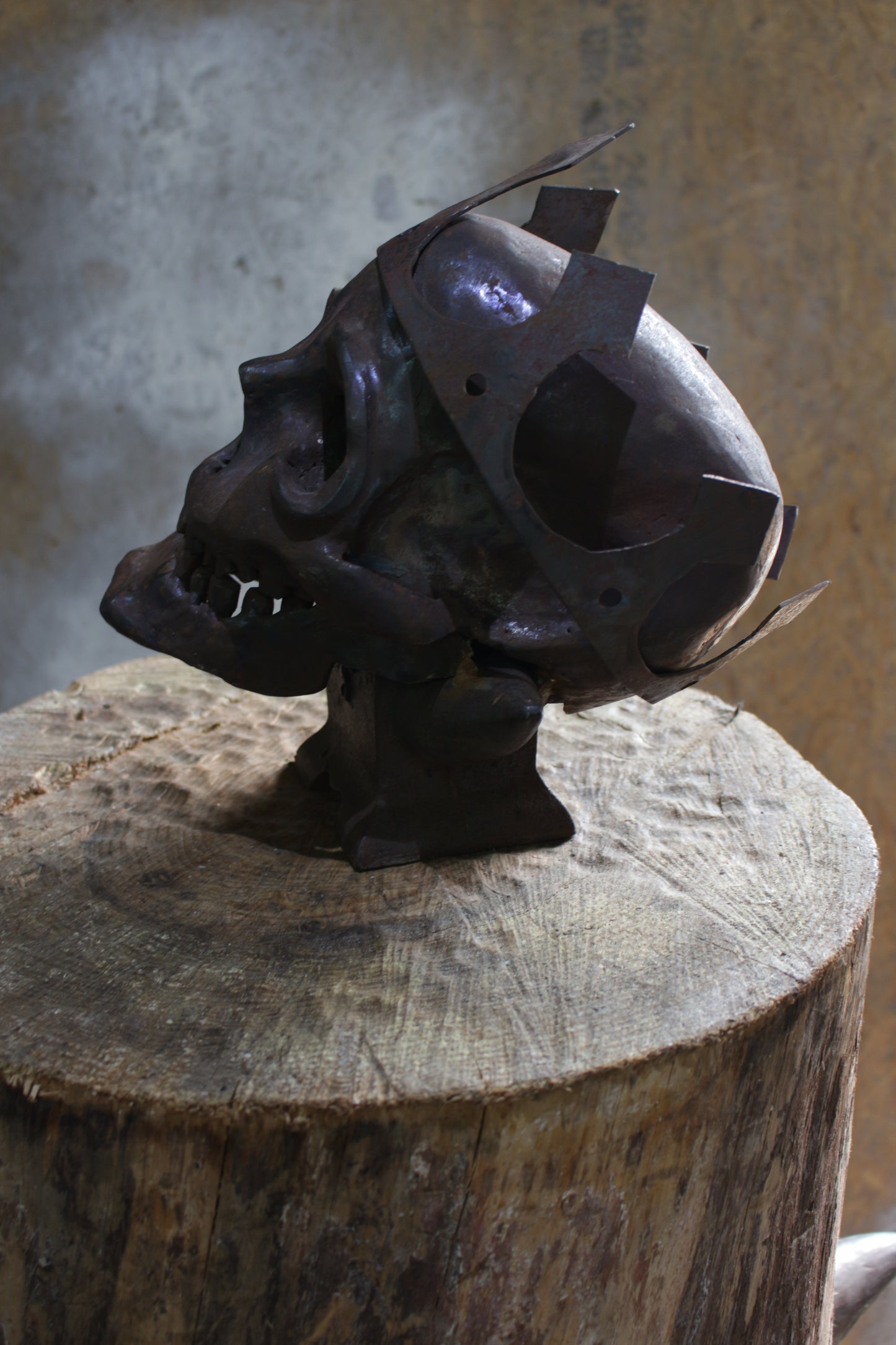
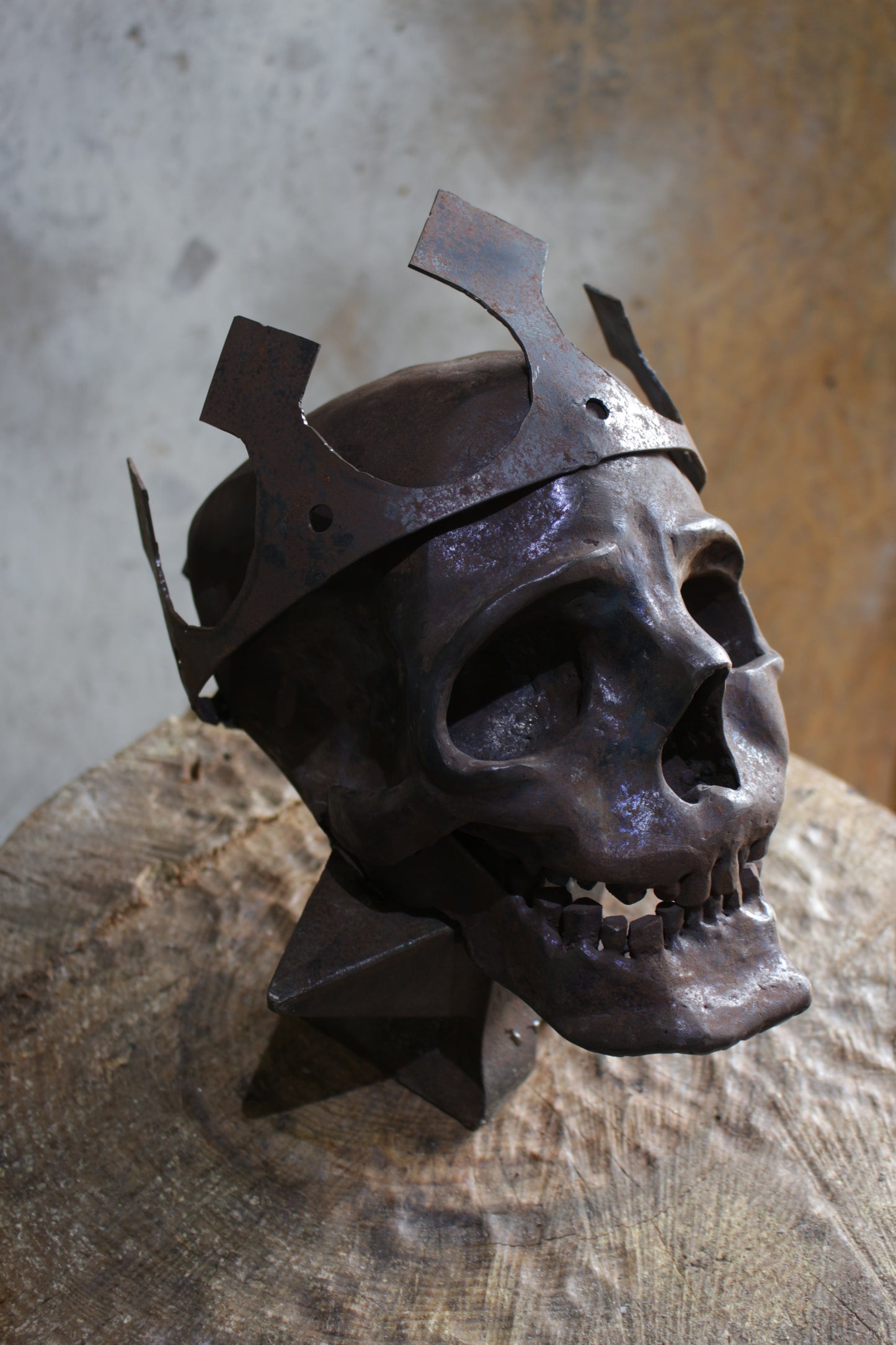
The crown remains on the head even after nothing remains of the man but the cranium. It is a symbol of fame, wealth, status, and power: values capable of occupying a large part of an existence, but destined to remain on the material plane. In the face of death, they retain their form, but lose what made them important.
The title evokes the myth of Tantalus, a figure favored by the gods and subsequently condemned to eternal torment: surrounded by water and fruit, he is never able to reach what could satisfy him. His punishment thus becomes an image of a desire incapable of finding fulfillment.
In the work, this condition transforms into a question addressed to the present: how much of our life is sacrificed to the pursuit of something that, once attained, will immediately demand to be replaced by something else?
The skull, however, rests on an anvil.
The anvil introduces into the work a meaning opposed to the simple fatality of death. It is the place where matter is hammered, transformed, and progressively brought to the desired shape. In a symbolic and almost alchemical reading, it therefore represents the individual’s possibility to actively participate in their own construction.
We do not choose the duration of our existence nor all the conditions in which we are called to live it, but we possess a responsibility in the way we decide to shape it.
For this reason, TANTALO is not merely a memento mori. Alongside the awareness of the end, it poses a question about life: if time is limited and we can contribute to giving shape to who we are, what do we choose to dedicate it to?
The tension between the crown and the anvil thus constitutes the center of the work: on one side, what we try to possess and show to others; on the other, the work through which we choose to build ourselves.
Technique and realization
Sculpture entirely handcrafted in wrought iron and sheet metal worked using mixed techniques.
The three-dimensional construction of the cranium originates from the manual modeling of the sheet metal, developed to obtain anatomical volumes and a strong sculptural presence while keeping the nature of the material recognizable.
The iron remains an integral part of the work’s language: a heavy material, transformable through labor and, symbolically, subjected to the same action of the anvil upon which the skull is placed.